Recipe
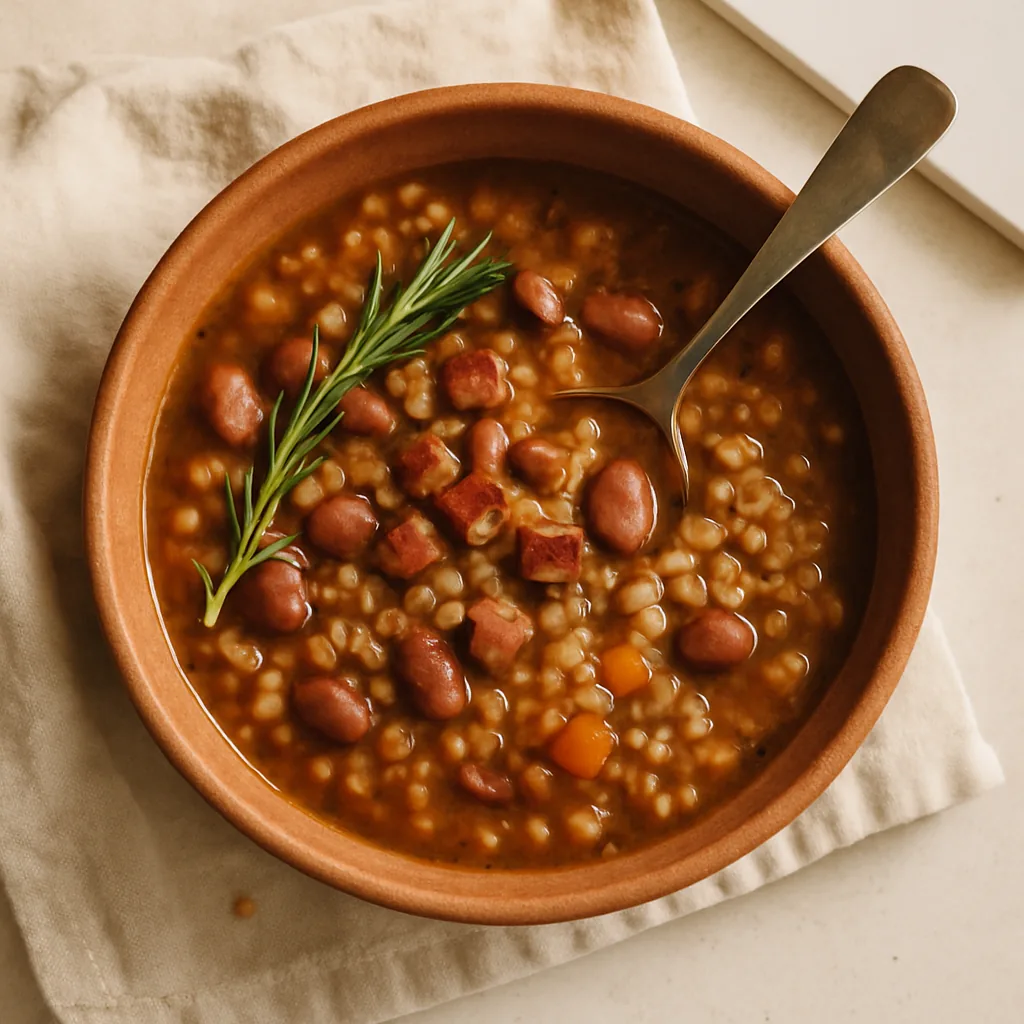
Zuppa di farro with borlotti and pancetta
Farro nearly died out, and what saved it was paperwork.
For most of the twentieth century farro was a peasant grain that nobody with a choice ate. It is harder to thresh than wheat, because the husk clings to the grain and has to be beaten off, and the yield per hectare is poor. Italian farmers spent decades pulling it up and planting something easier to sell. By the 1970s it survived in any commercial quantity in essentially one place: the Garfagnana, a mountain valley in northern Tuscany where the soil was poor enough that nothing more profitable would grow.
Then in 1996 Farro della Garfagnana was granted protected geographical status by the European Union, which sounds like the least romantic rescue imaginable and was exactly that. Overnight the grain had a name worth protecting, a price worth farming for and a market that wanted it. It is now on menus in cities where nobody had heard of it thirty years ago.
The reason it deserved saving is texture. Farro does not go soft the way rice, pasta and even barley eventually do. It keeps a distinct nutty chew more or less indefinitely, which makes it the best possible grain for a soup you intend to eat on Wednesday. The alternative is opening a box at your desk to find that the soup has become a single solid block of swollen starch.
With borlotti and a piece of pancetta it makes the thickest and most filling soup in this book, essentially a minestrone that has decided to become a stew. It costs about a euro twenty a portion and it makes four of them.
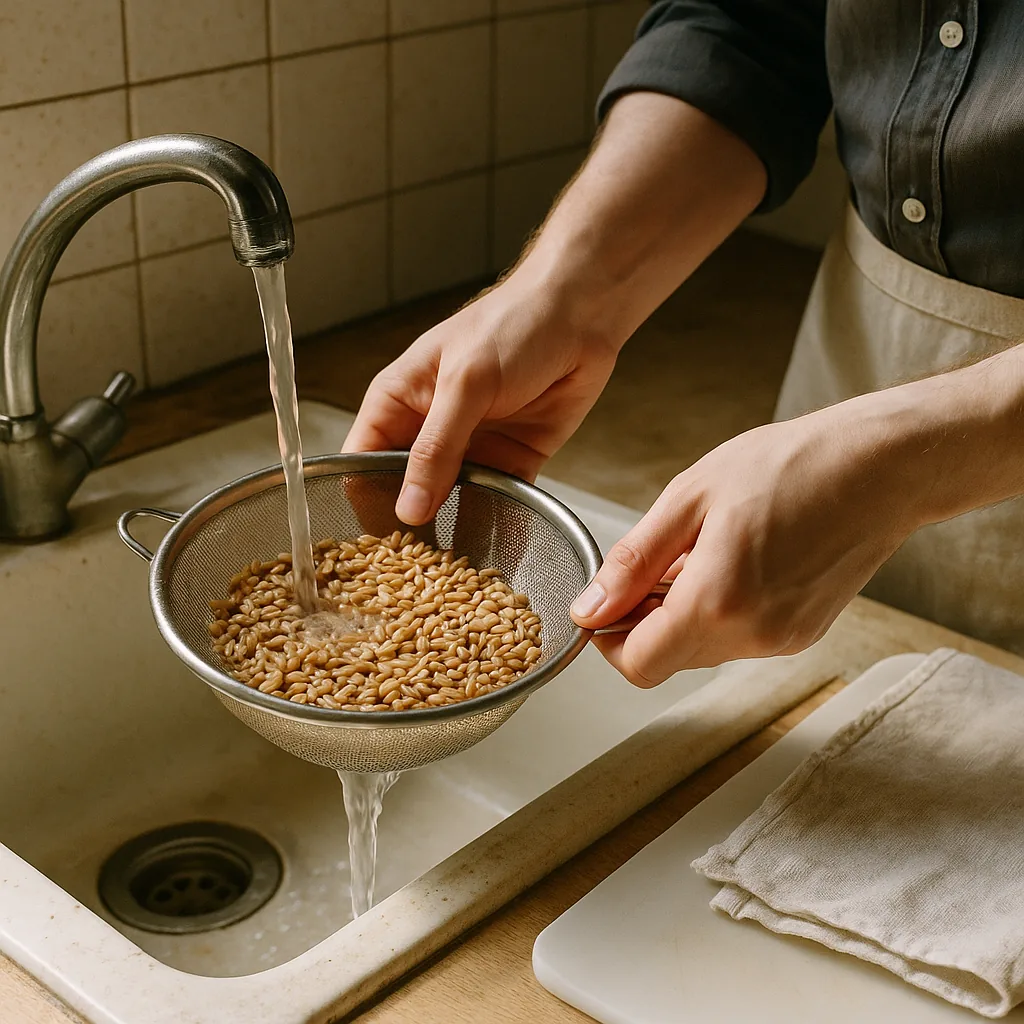
Pearled farro is what most shops sell, needs no soaking, and takes half an hour.
- Prep 15 min
- Cook 45 min
- Serves 4
- Cost €
Method
- 1
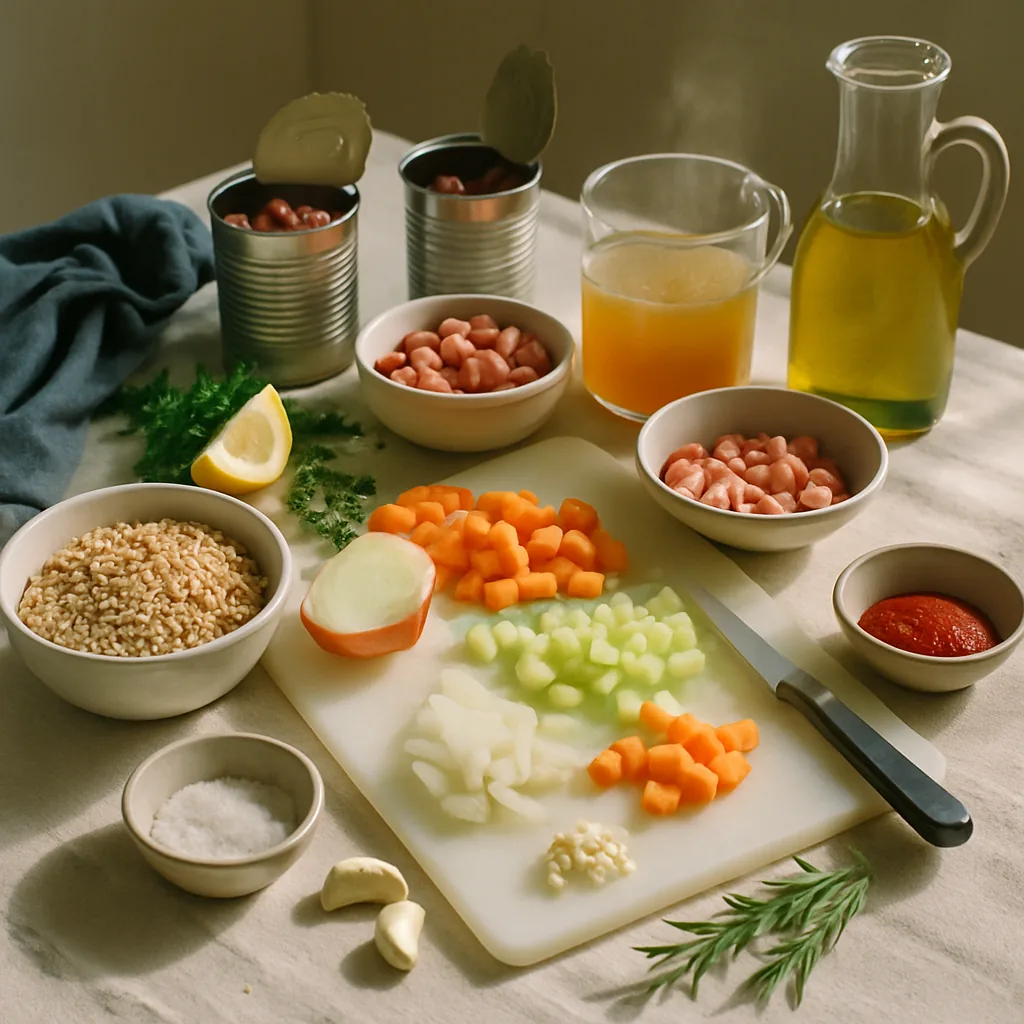
Fry the pancetta in 2 tbsp of the oil in a large pot until the fat has run and the edges are crisp.
6 min
- 2
Add the onion, carrot and celery with a pinch of salt and cook gently in that fat until soft.
12 min
- 3
Add the garlic, rosemary and tomato purée, stir for a minute until it darkens, then add the stock and half the beans.
3 min
- 4
Blend the other half of the beans with a ladleful of stock until smooth and stir that in. This is the difference between a watery soup and a thick one.
3 min
- 5
Add the farro and simmer, half-covered, until it is tender with a chew still in it. Stir occasionally so it does not settle and stick.
30 min
- 6
Fish out the rosemary stalk, season hard, and serve with the rest of the olive oil poured over and a lot of black pepper.
2 min
Variations
Leave out the pancetta, use vegetable stock and add a spoon of smoked paprika for a vegan version. Pearl barley or spelt work identically. Add cavolo nero or chard in the last 10 minutes. A parmigiano rind in the broth is excellent. It thickens overnight into something closer to a stew, which is not a problem: loosen it with hot water when you reheat. Freezes for 3 months.