Chef's pick
Spaghetti alla bottarga with courgette and lemon breadcrumbs
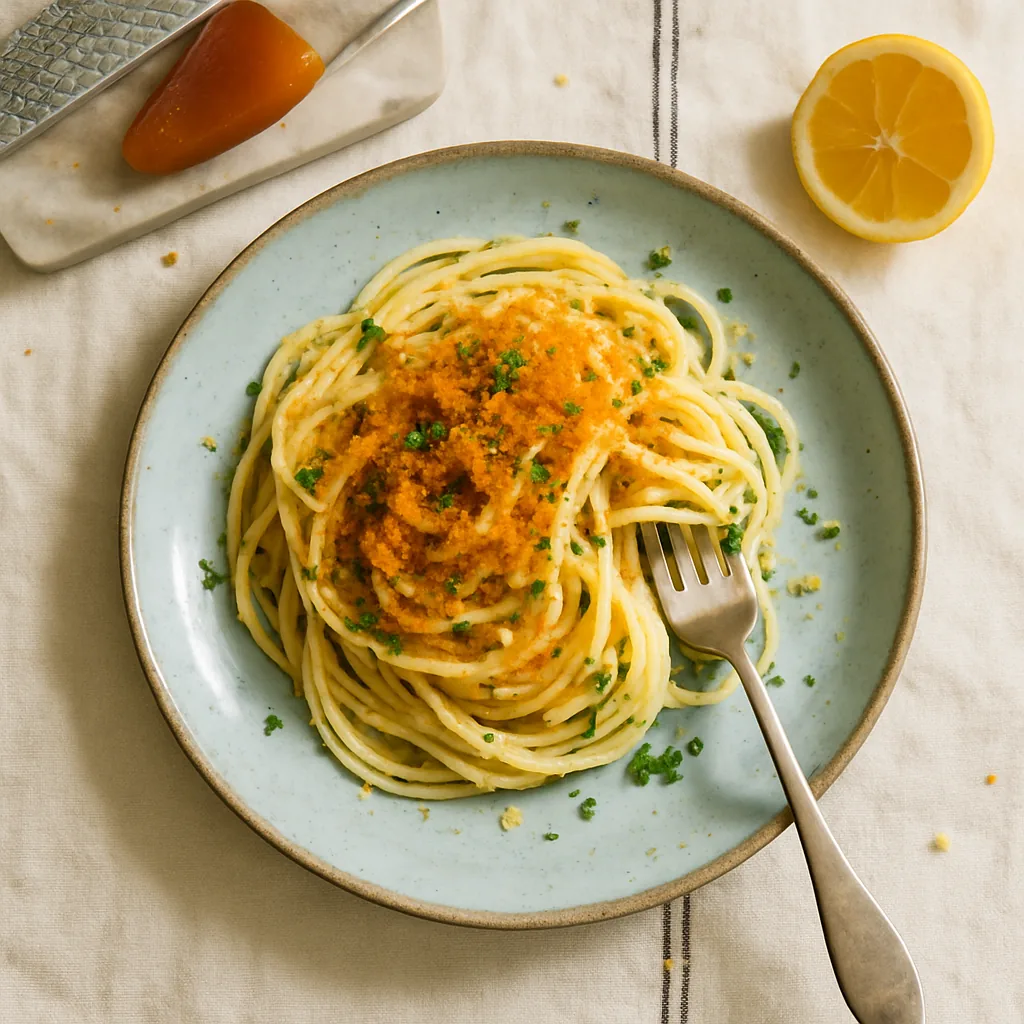
Bottarga is grey mullet roe, lifted out whole in its sac, salted, pressed flat and left to dry until it turns the colour of dark amber and goes firm enough to grate. In Sardinia the best of it comes from the lagoon at Cabras, on the west coast, where the trade is old and where a block of it is treated with the seriousness other places reserve for wine.
The name travelled a long way to get here. It comes from the Arabic butarikh, which came in turn from Coptic, and versions of the same preserved roe turn up all round the Mediterranean and as far as Japan, where it is called karasumi. Sardinia did not invent it and has never needed to claim otherwise. What Sardinia did was decide, at some point nobody wrote down, that it belonged on spaghetti with oil and garlic and nothing else in the way.
People selling it call it Sardinian caviar, which is a sales phrase, but the price is real enough: a block costs what a decent bottle of wine costs. Here is why it earns its place in a book about cooking for one anyway. A piece the size of a phone weighs about 100 grams, you use 20 grams a head, and wrapped in foil in the fridge it keeps for months without complaint. It is not a luxury you buy for an occasion. It is a luxury that lives in the fridge door for a whole season and turns eight otherwise unremarkable Tuesdays into something worth sitting down for.
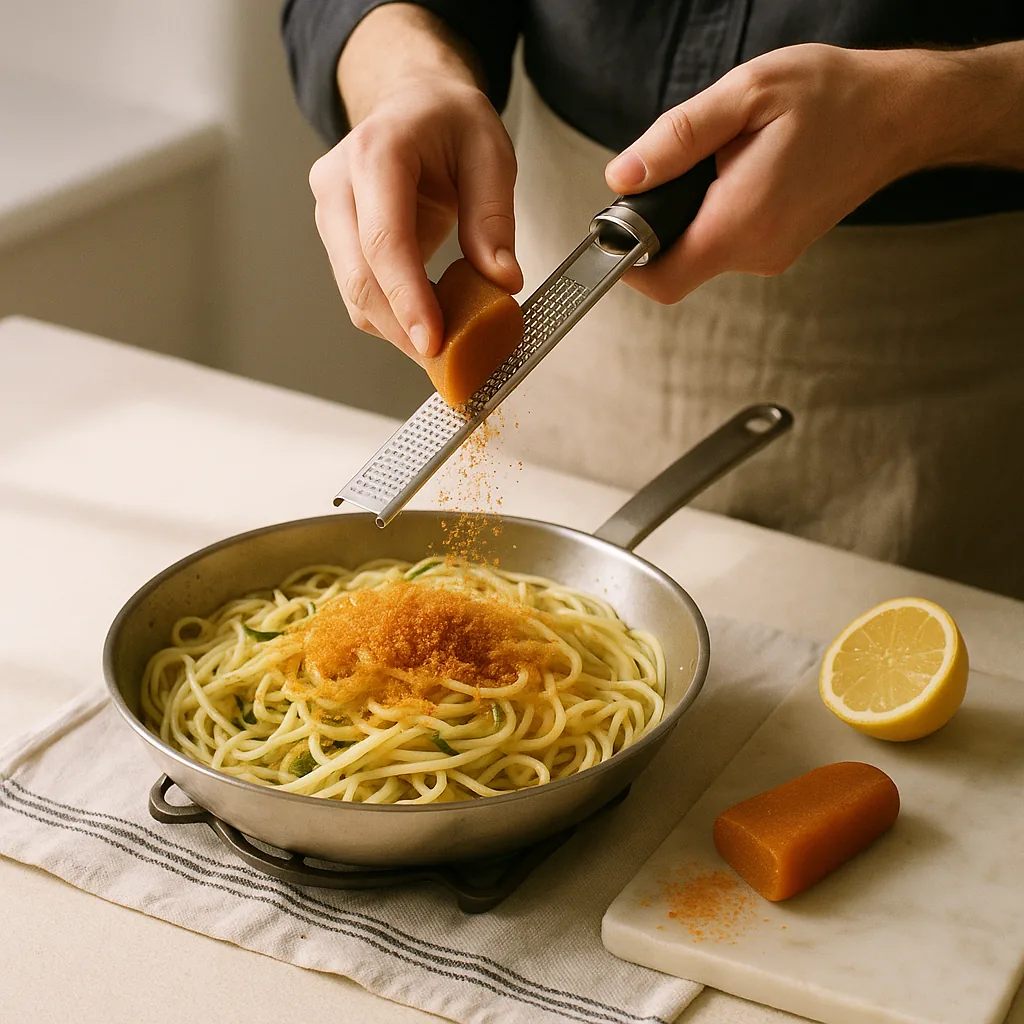
One rule, and it is the only difficult thing in the whole dish: bottarga must never meet direct heat. Cook it and it turns bitter and grainy and your money is gone. It goes into the pan off the flame, with a splash of pasta water, where it melts into something halfway between a sauce and a seasoning.
- Prep 10 min
- Cook 12 min
- Serves 2
- Cost €€€
Method
- 1
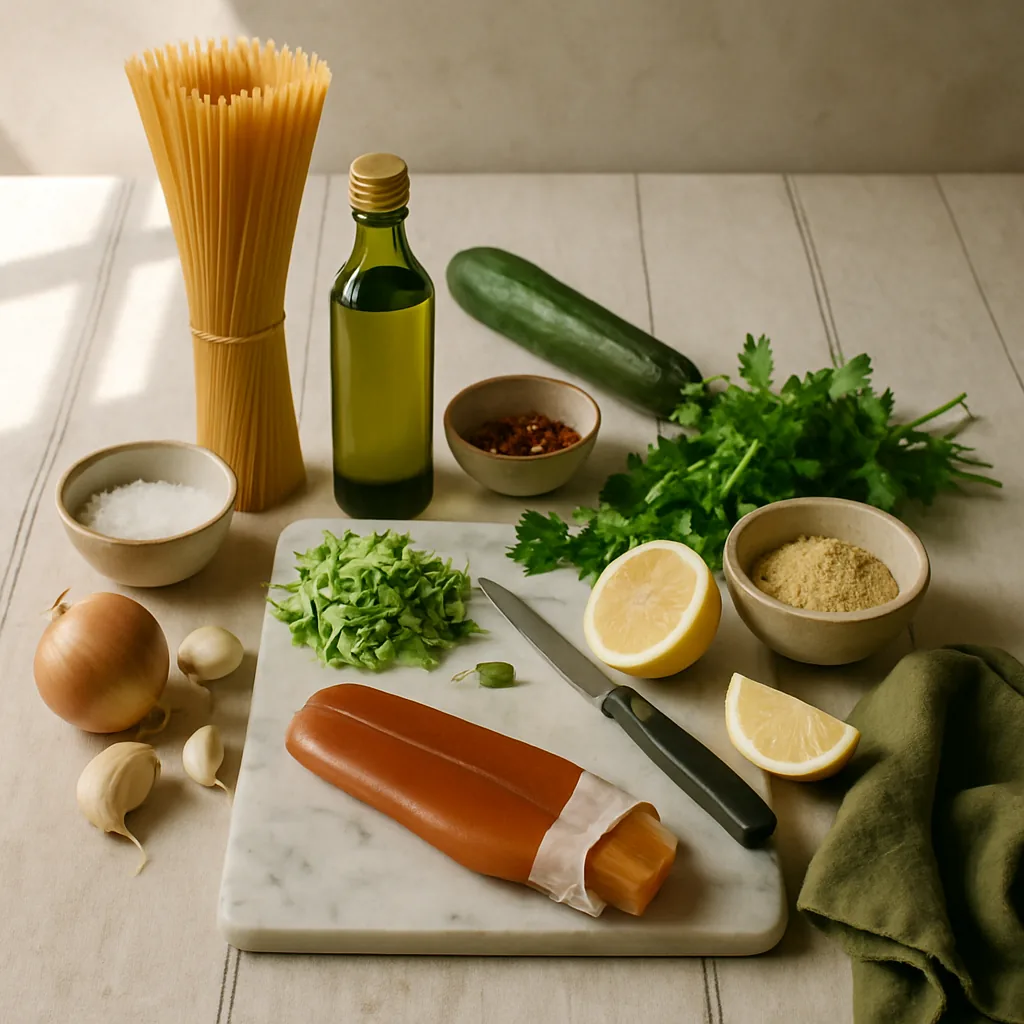
Toast the breadcrumbs in a dry pan with 1 tbsp of the oil until they are properly golden, then tip them onto a plate and stir through the lemon zest and a small pinch of salt. Do this first: they burn the moment you turn your back on them.
4 min
- 2
Put the pasta on in lightly salted water. Bottarga is cured in salt and brings plenty of its own, so season the water at about half your usual hand.
9 min
- 3
Meanwhile warm the remaining 3 tbsp oil in a wide pan over a low heat with the garlic and chilli until the garlic smells sweet but has taken no colour. Add the grated courgette, a pinch of salt, and cook until it slumps and loses its raw edge.
6 min
- 4
Fish out the garlic. Scoop out a mug of pasta water, drain the spaghetti a minute short, and tip it into the pan. Now take the pan off the heat completely.
1 min
- 5
Add three quarters of the bottarga and a good splash of pasta water, and toss hard for half a minute until it turns creamy and coats the strands.
Off the heat, always. Bottarga that gets cooked goes bitter and grainy, and that is the one way to ruin this.
1 min
- 6
Squeeze in the lemon juice, throw in the parsley, and toss again. Plate it, then finish with the last of the bottarga and a heavy scattering of the lemon breadcrumbs.
2 min
Variations
Swap the courgette for asparagus tips in spring, or for a handful of halved cherry tomatoes burst in the oil, which makes it sweeter and less austere. A few rocket leaves thrown in at the end work well too.
If you cannot find bottarga, do not substitute and pretend: four anchovy fillets melted into the oil with the garlic, plus extra lemon zest, gives you a good dish, just not this one.
Buy the block rather than the ready-grated jar if you have the choice. The jar is cheaper for a reason and loses its smell within weeks. Keep the block wrapped in foil in the fridge and grate it to order.