Recipe
Ribollita with cavolo nero and cannellini
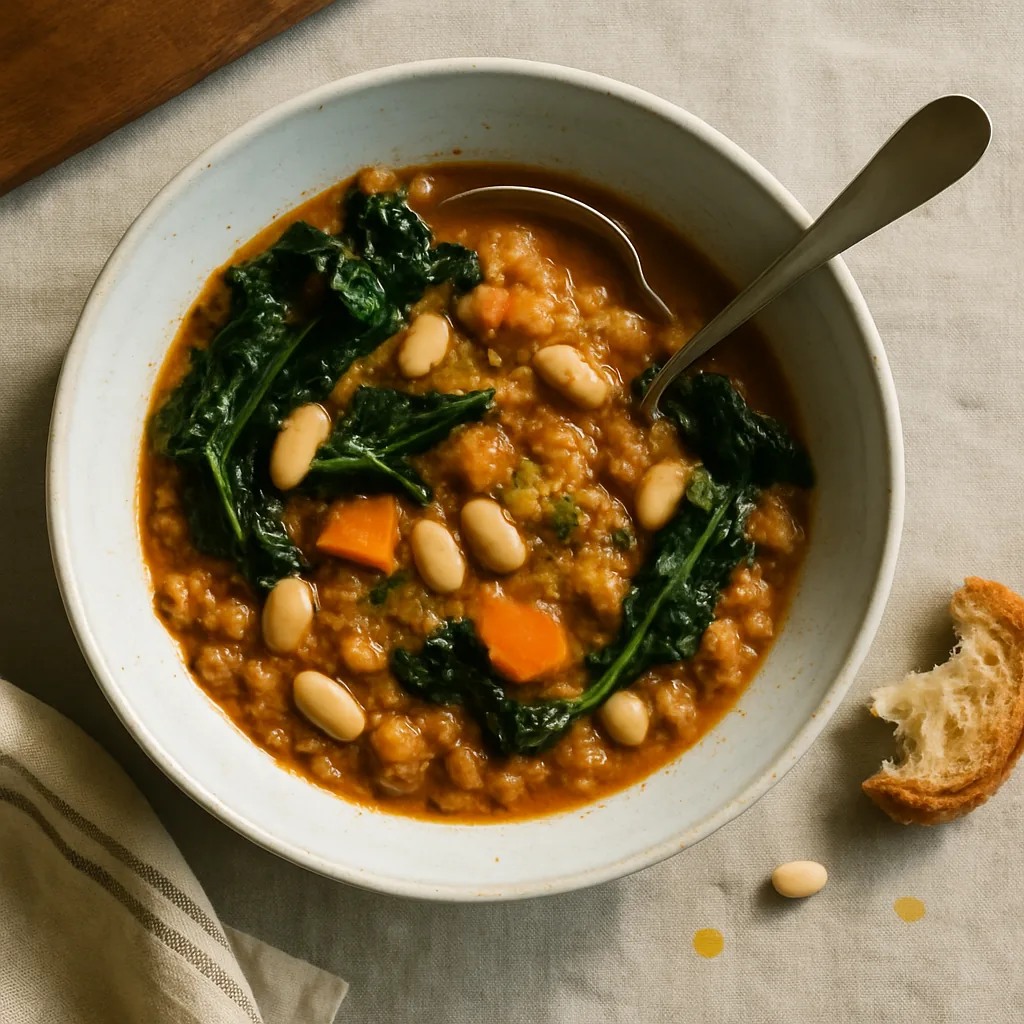
The same Tuscan grandmother who refused to switch on an oven in August made ribollita in January, and it took her three days, and she considered that a perfectly normal amount of time for a soup.
Day one was the vegetables: beans, cavolo nero, carrot, celery, onion and potato cooked slowly down into a thick minestrone. Day two was the ribollita proper, because ribollita means reboiled. You layer yesterday's soup with slices of stale unsalted Tuscan bread in a pot and boil it again, and the bread disintegrates and thickens the whole thing into something a spoon will nearly stand up in. Day three, if any of it had survived, it went into a frying pan with olive oil until the bottom went crisp.
The bread is the entire point, and it is why the dish exists at all. Tuscan bread is made without salt, for reasons involving a medieval salt tax and a grudge that has outlasted everyone involved, and it goes stale by the second day with total reliability. A region built on bread that stales immediately develops a great many recipes for stale bread, which is why Tuscany also has panzanella, pappa al pomodoro and acquacotta.
What that means for anybody carrying lunch is worth stating plainly, because it is unusual. This is not a dish that tolerates reheating. This is a dish whose entire identity is the second cooking. Making ribollita and eating it fresh is missing the point in a way that would have genuinely baffled my grandmother.
Cavolo nero is not optional. It is the dark, blistered, almost black kale that turns sweet after a frost, and nothing else brings the same depth. Curly kale is a substitute, not an equal.
- Prep 20 min
- Cook 1h
- Serves 4
- Cost €
Method
- 1
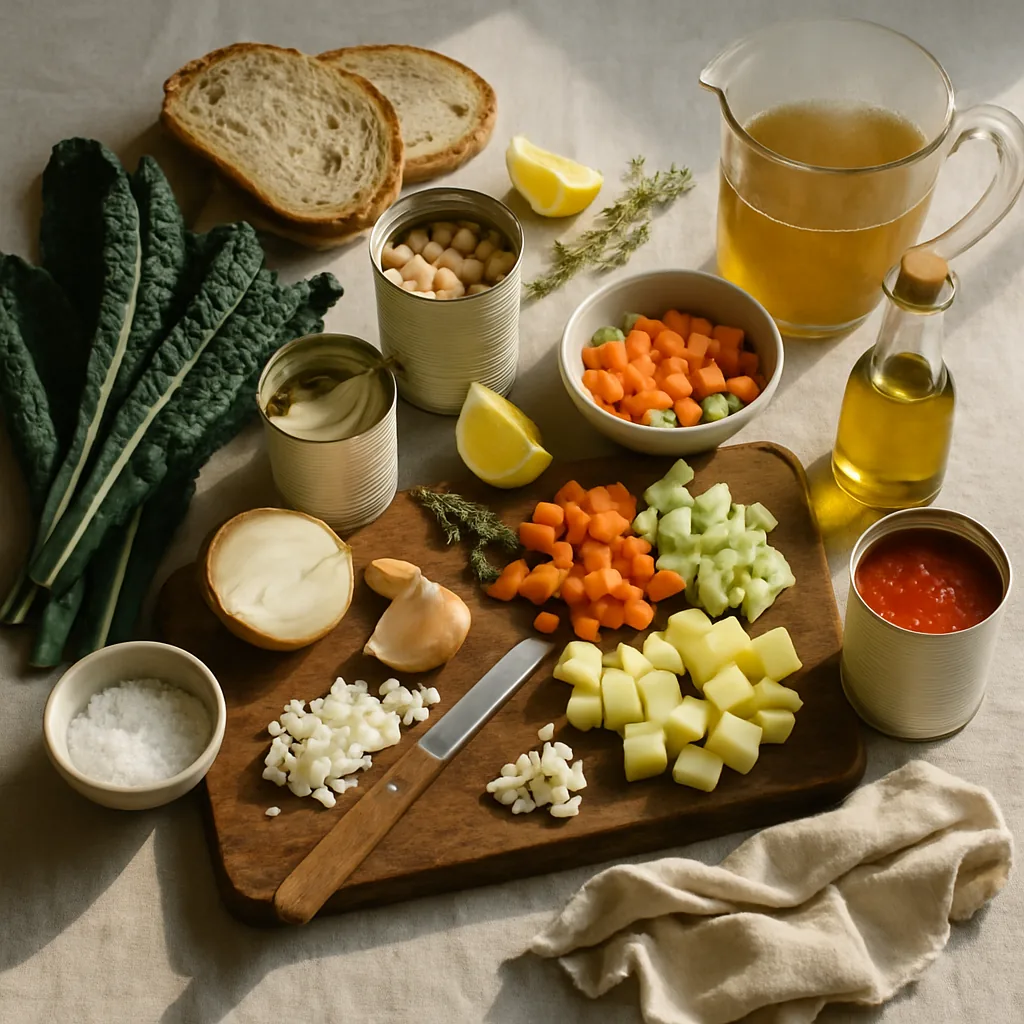
Cook the onion, carrot and celery in 3 tbsp of the oil over low heat with a pinch of salt until completely soft and sweet. This takes longer than you want it to.
15 min
- 2
Add the garlic and thyme for a minute, then the tomatoes, and cook until they darken.
5 min
- 3
Add the potato, one tin of the beans and the stock. Simmer 20 minutes.
20 min
- 4
Blend the second tin of beans with a ladleful of the broth until smooth and stir it in. This is what gives ribollita its body without any cream.
3 min
- 5
Add the cavolo nero and simmer until it is completely tender and has lost all its squeak. Season hard.
20 min
- 6
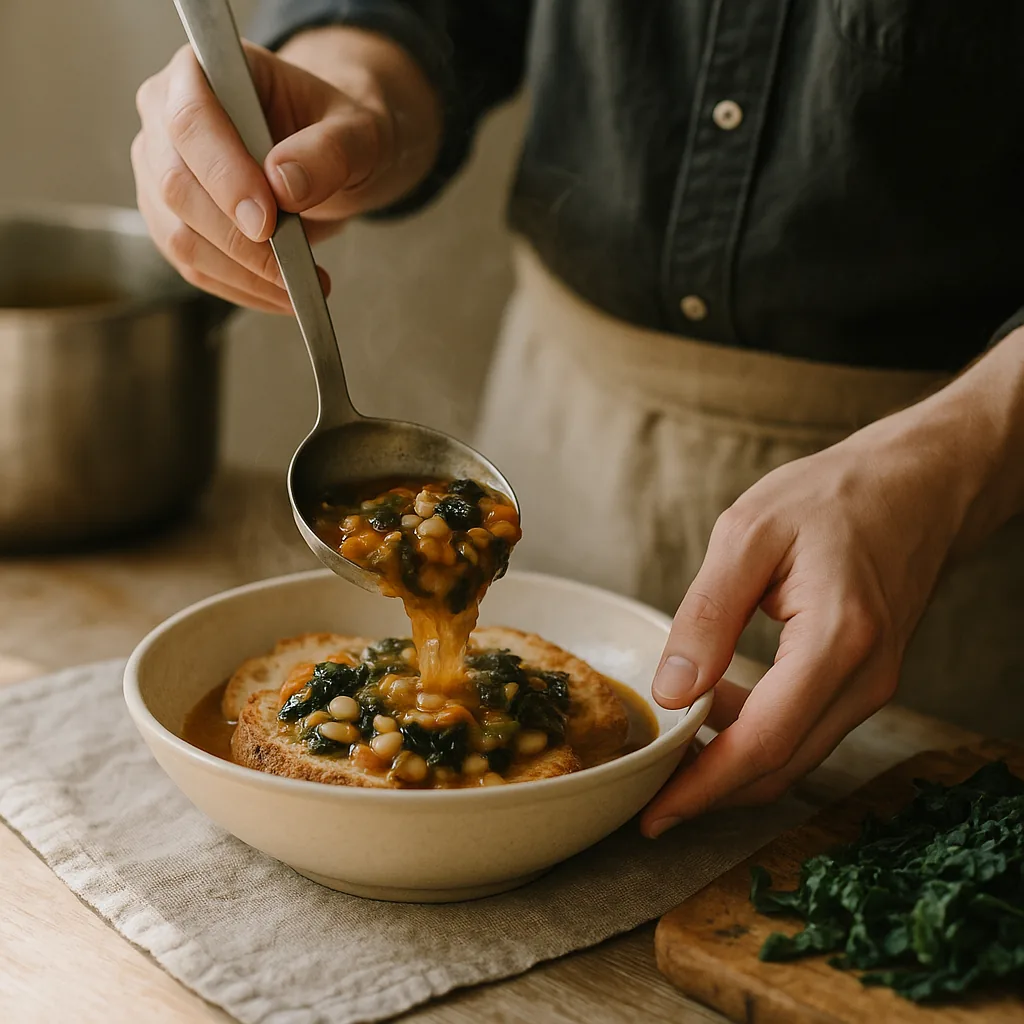
Tear the bread into the pot, stir once, and leave it off the heat for 20 minutes to collapse. Reheat the next day, when it becomes ribollita. Serve with a lot of raw olive oil.
20 min
Variations
A parmigiano rind in at step 3 adds depth and loses the vegan flag. Swap cavolo nero for curly kale, chard or savoy cabbage. Add a piece of pancetta with the soffritto for a meatier pot. On day three, fry portions in a hot pan with oil until a crust forms on the bottom, which is the traditional and best way to finish it. Freezes well before the bread goes in, less well after.