Recipe
Pasta e fagioli
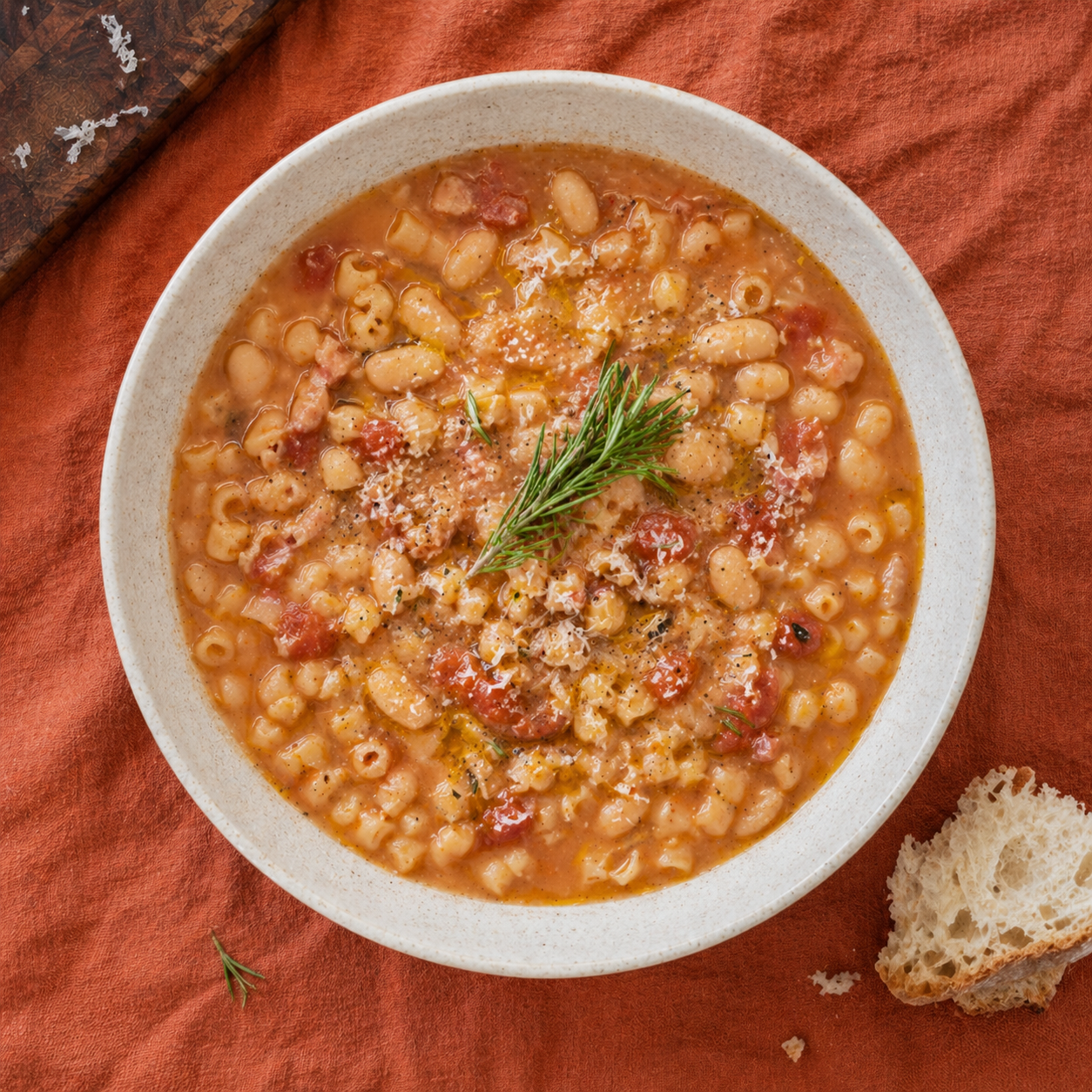
Every Italian family has a pasta e fagioli and every Italian family thinks theirs is the real one. In Tuscany they'll insist on cannellini. In the Veneto they'll swear by borlotti. In Naples they'll crack in a parmigiano rind and a piece of pork skin and dare you to argue. The correct answer, of course, is whichever one your nonna made. Ours used borlotti, because our nonna came from a village near Treviso where borlotti beans grew in the back garden like weeds and got dried in the sun on the balcony every August.
We remember eating this soup as children at a round table with a plastic tablecloth patterned with oranges and lemons, the kind you wipe down with a sponge. It was always served too hot, always eaten too fast, always followed by our nonno announcing that he wanted more, and always given more despite our nonna muttering basta, ti fa male. In our twenties, when we moved into a flat share in a different city, we called her one cold November to ask how long the beans needed to cook. She laughed for about thirty seconds and then gave us a recipe that was almost entirely composed of the phrase finché non ha l'aria giusta, until it looks right.
What follows is our attempt to translate that into actual numbers. Think of it as a thick, brown, savoury soup that sits between a zuppa and a pasta dish, the beans half-mashed into the broth and the little pasta tubes bobbing around looking for something to do. It costs about two euros to make, reheats better than it eats fresh, and makes you feel like an adult for having made it. Perfect for the week after payday, when the ambition is high and the funds are low.
- Prep 10 min
- Cook 30 min
- Serves 2
- Cost €
Method
- 1
Warm the olive oil in a heavy pot over medium heat. Add the onion, carrot, and celery with a pinch of salt. Cook until softened and fragrant, stirring now and then.
8 min
- 2
Add the garlic, rosemary, and bay leaf. Stir for 30 seconds until the kitchen smells good.
1 min
- 3
Add the tomato passata and stir for a minute until it darkens.
1 min
- 4
Tip in half the beans plus about 300 ml of the hot stock. Simmer gently for 5 minutes.
5 min
- 5
While that simmers, blitz the other half of the beans with the rest of the stock using a stick blender (or mash thoroughly with a fork) until you have a rough cream.
2 min
- 6
Pour the bean purée back into the pot, stir, and bring back to a simmer.
2 min
- 7
Add the pasta and cook until al dente, stirring often so nothing sticks.
10 min
- 8
Fish out the bay leaf and rosemary stem. Taste, adjust salt and pepper.
1 min
- 9
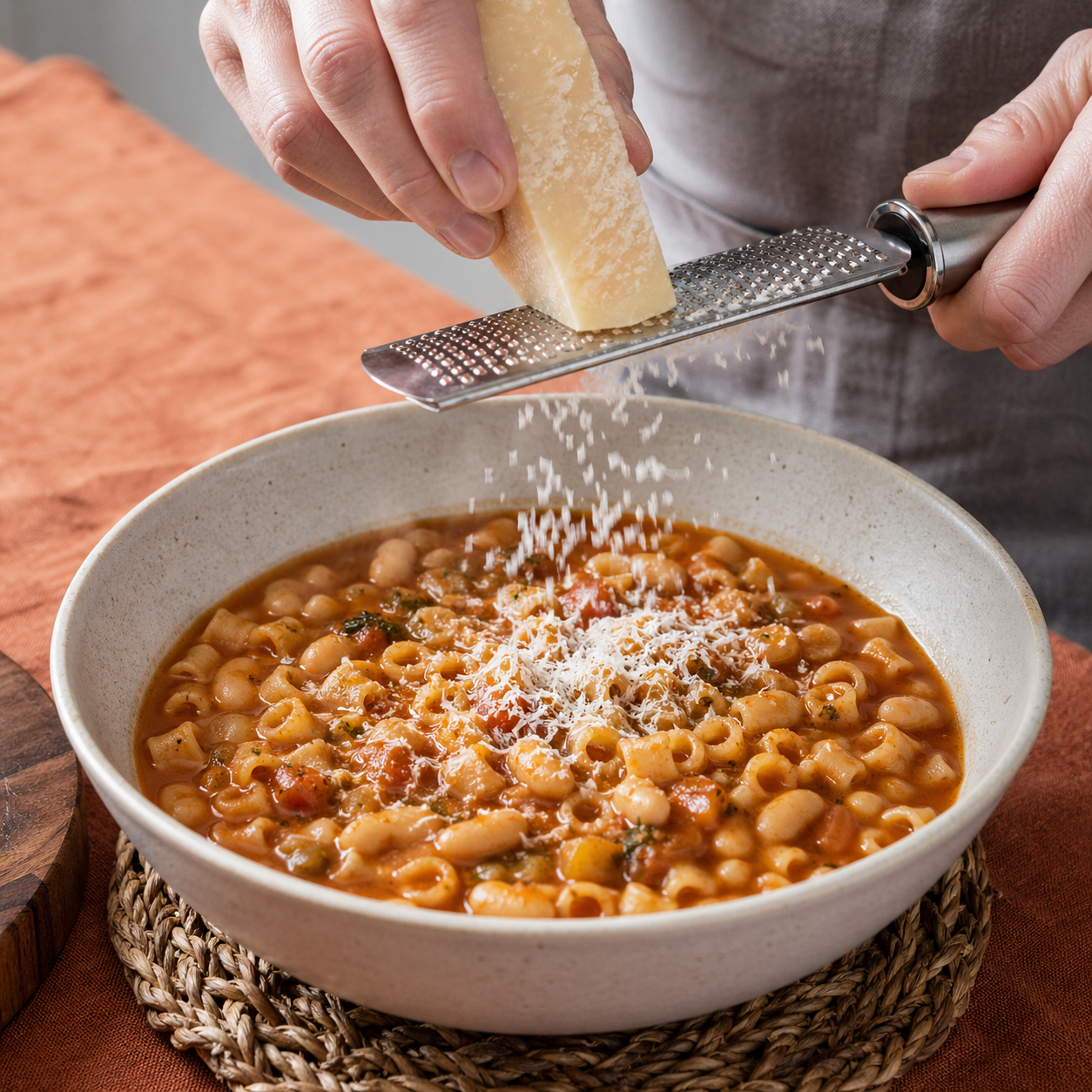
Serve in bowls with a generous drizzle of olive oil, a crack of black pepper, and a piece of crusty bread.
1 min
Variations
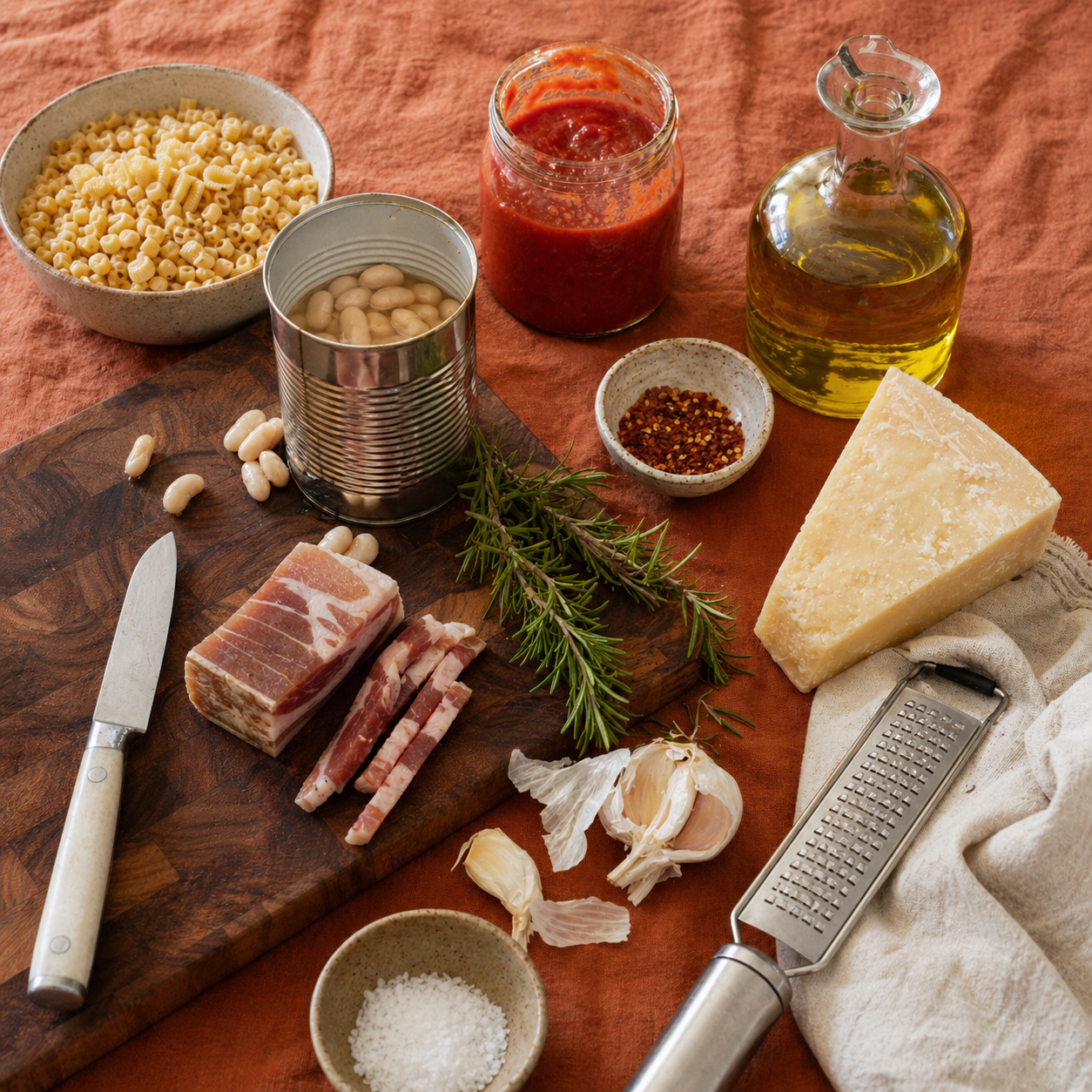
Drop a parmigiano rind into the pot at step 4 and fish it out at the end; it adds quiet depth. For a Tuscan version, fry a piece of pancetta or guanciale with the soffritto at step 1. In the Veneto they sometimes add a handful of fresh egg tagliatelle broken into short pieces instead of ditalini, which is excellent. Canned beans are the fast route; soaked and simmered dried beans give a nobler soup but need an extra 40 minutes.