Recipe
Aubergine, chickpea, and tomato bake with bulgur
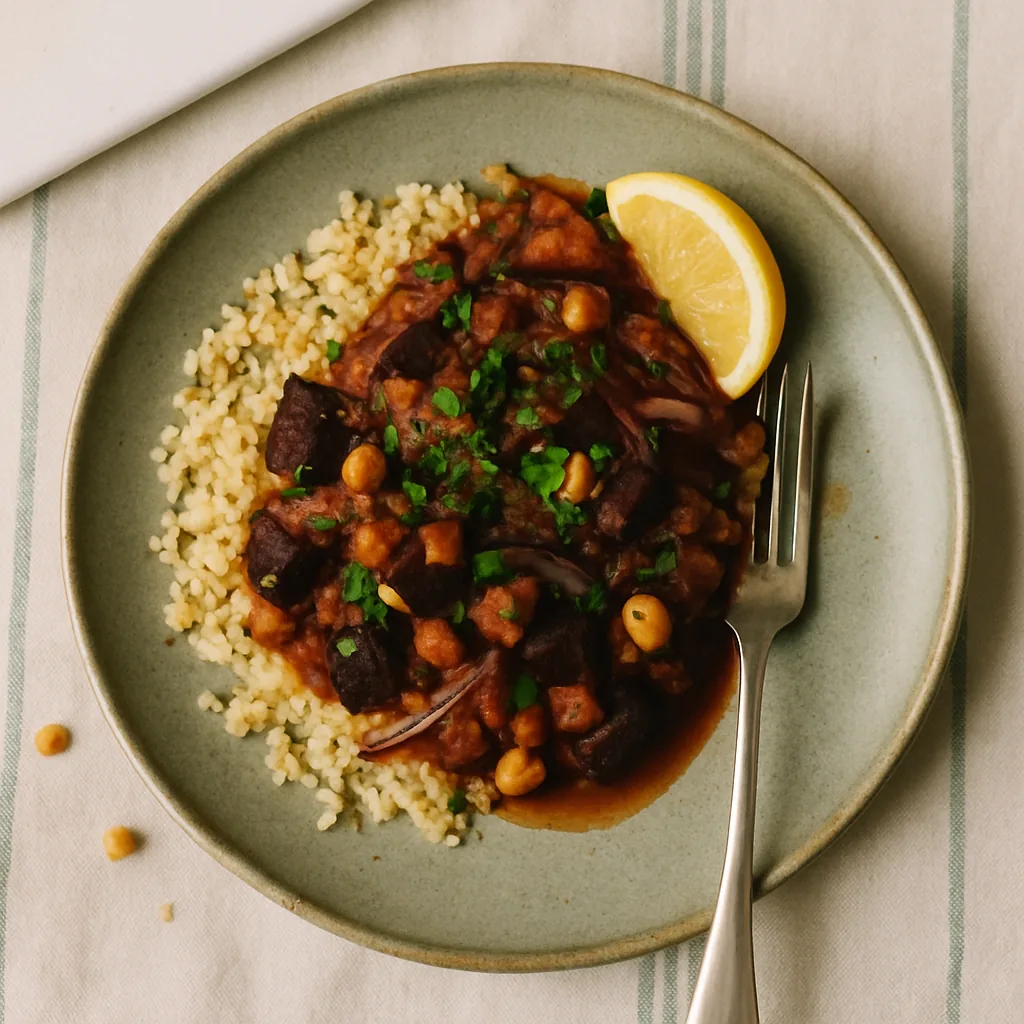
The Italian word for aubergine is melanzana, and the folk etymology, which is far too good to check carefully, has it coming from mela insana: the unhealthy apple, the mad apple, the apple that will do something bad to you.
Medieval Europe was deeply suspicious of the aubergine. It arrived with the Arabs, it belonged to the nightshade family, which was a family with a reputation, and it was widely held to bring on fever, insanity and a general moral decline. Botanists wrote it up as a curiosity rather than as food. It took Italy several centuries to come round, and when the south finally did come round it did so completely, to the point where it is now impossible to imagine Sicilian or Neapolitan cooking without it.
The long suspicion makes more sense once you accept that a badly cooked aubergine really is unpleasant. Undercooked, it is squeaky and bitter and coats the roof of your mouth in a way that does feel like a warning from your own body. Properly cooked, it goes silky and rich and behaves almost like meat, which is precisely why every vegan cookbook in the world leans on it as hard as it does.
The rule is heat, patience, and more oil than feels reasonable. An aubergine is a sponge: it drinks oil for about ninety seconds and then gives most of it back, and the people who try to be virtuous at that step are the reason so many people are convinced they dislike aubergine. Roasting the cubes hard at 220 degrees rather than frying them uses a third of the oil and gets you most of the way there.
Chickpeas and tomato go in alongside and the whole thing bakes down into something between a stew and a gratin. Bulgur underneath needs ten minutes and a kettle, and spends the night soaking up everything the tray gives off.
- Prep 15 min
- Cook 35 min
- Serves 2
- Cost €
Method
- 1
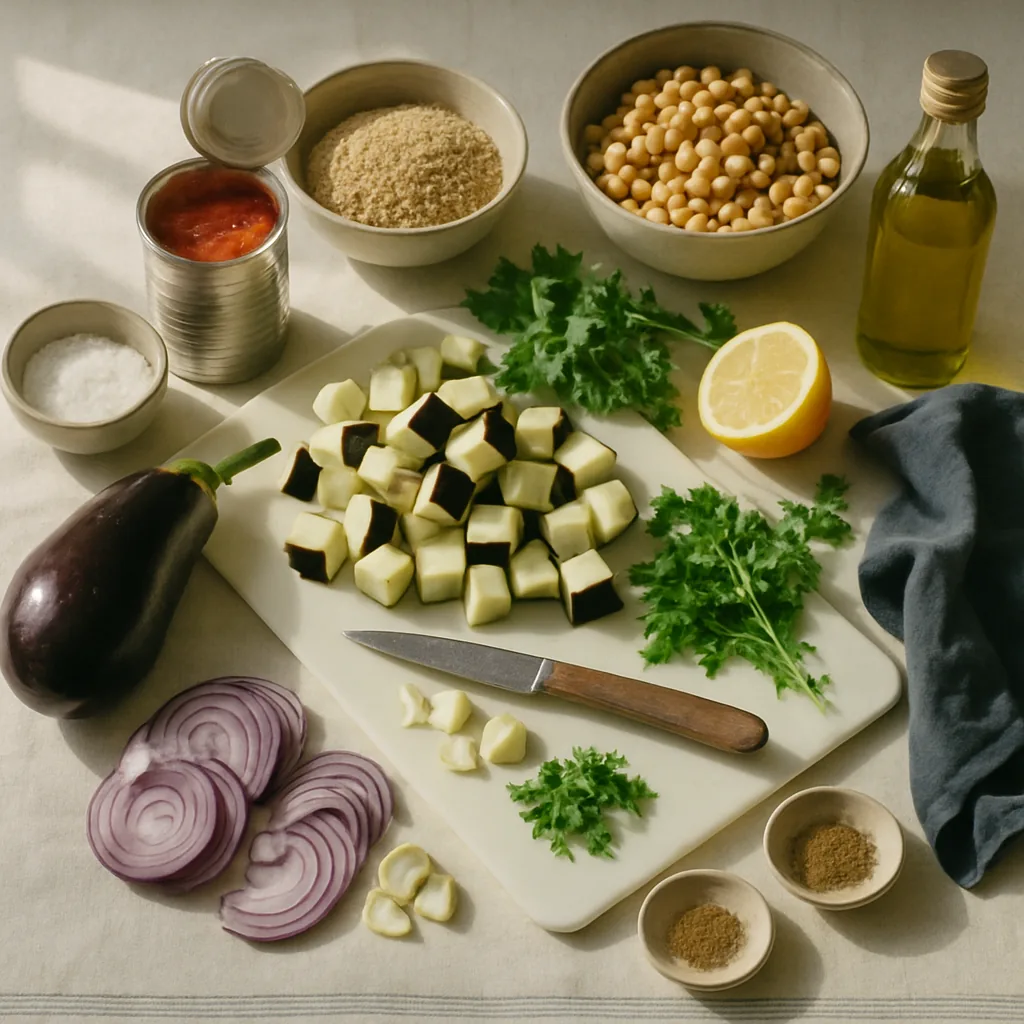
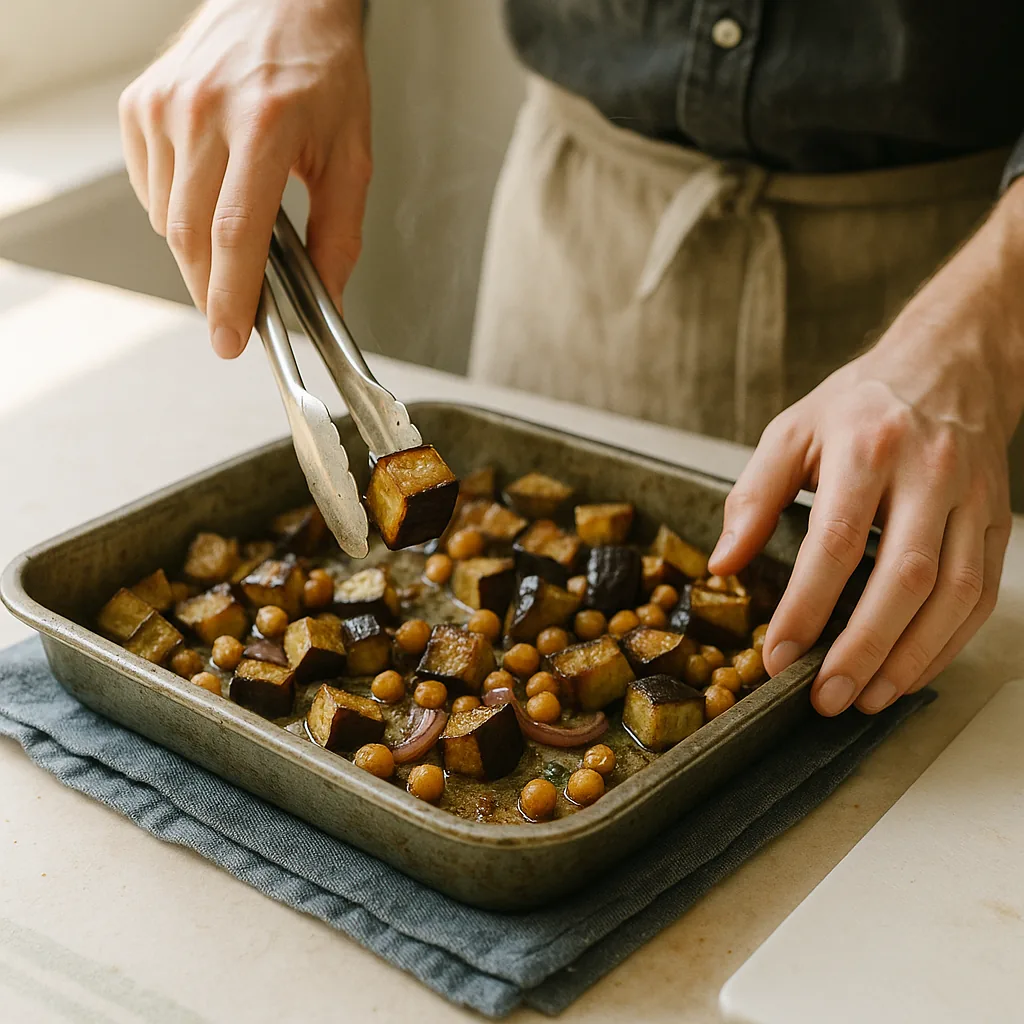
Heat the oven to 220°C fan. Toss the aubergine cubes with 4 tbsp of the oil and a lot of salt. Spread them over a large tray with space between them, because a crowded tray steams instead of roasting.
8 min
- 2
Roast until deeply coloured and completely soft, shaking the tray once halfway.
25 min
- 3
Meanwhile cook the onion in the last of the oil in a pan until soft, then add the garlic, cumin and oregano for a minute.
8 min
- 4
Add the tomatoes and chickpeas, season, and simmer until thick.
12 min
- 5
Fold the roasted aubergine into the tomato, tip it all back into the tray, and return it to the oven for 10 minutes so the top catches.
10 min
- 6
Pour 300 ml of boiling salted water over the bulgur, cover, and leave 10 minutes. Fork it through with the parsley and lemon juice, and serve underneath.
11 min
Variations
Crumbled feta or spoonfuls of ricotta over the top before the final 10 minutes make it richer and lose the vegan flag. A teaspoon of cinnamon with the cumin takes it towards Greek moussaka territory. Add a diced pepper with the onion. Serve with rice, couscous or flatbread instead of bulgur. Toasted pine nuts and pomegranate on top is the show-off version. Reheats better than almost anything else in this book.