Recipe
Potato, mint, and pecorino gnocchi with tomato sauce
In Ogliastra, on the east coast of Sardinia where the mountains come down almost to the sea, they make culurgiones. These are parcels of pasta filled with potato mashed with pecorino, mint and a little garlic, and closed along the top with a pleat called a spighitta, a wheat ear, worked by hand so that the seam looks braided. It is one of those foods that carries a whole argument about a place inside it: the filling is poor food, potatoes and cheese, and the closing is showing off.
They were not everyday food either. Culurgiones were made for All Souls and given away to neighbours and to the families of the dead, which is why the wheat ear is on top of them. Somewhere along the line they stopped being solemn and became what you put in front of a guest.
I once watched a woman at a market stall in Tortolì close one every four seconds while holding a conversation with somebody behind her about a parking space. I timed it, because I had already worked out that I would never be able to do it. That skill takes about twenty years, which is roughly nineteen years and eleven months more than most of us are prepared to give a Tuesday dinner.
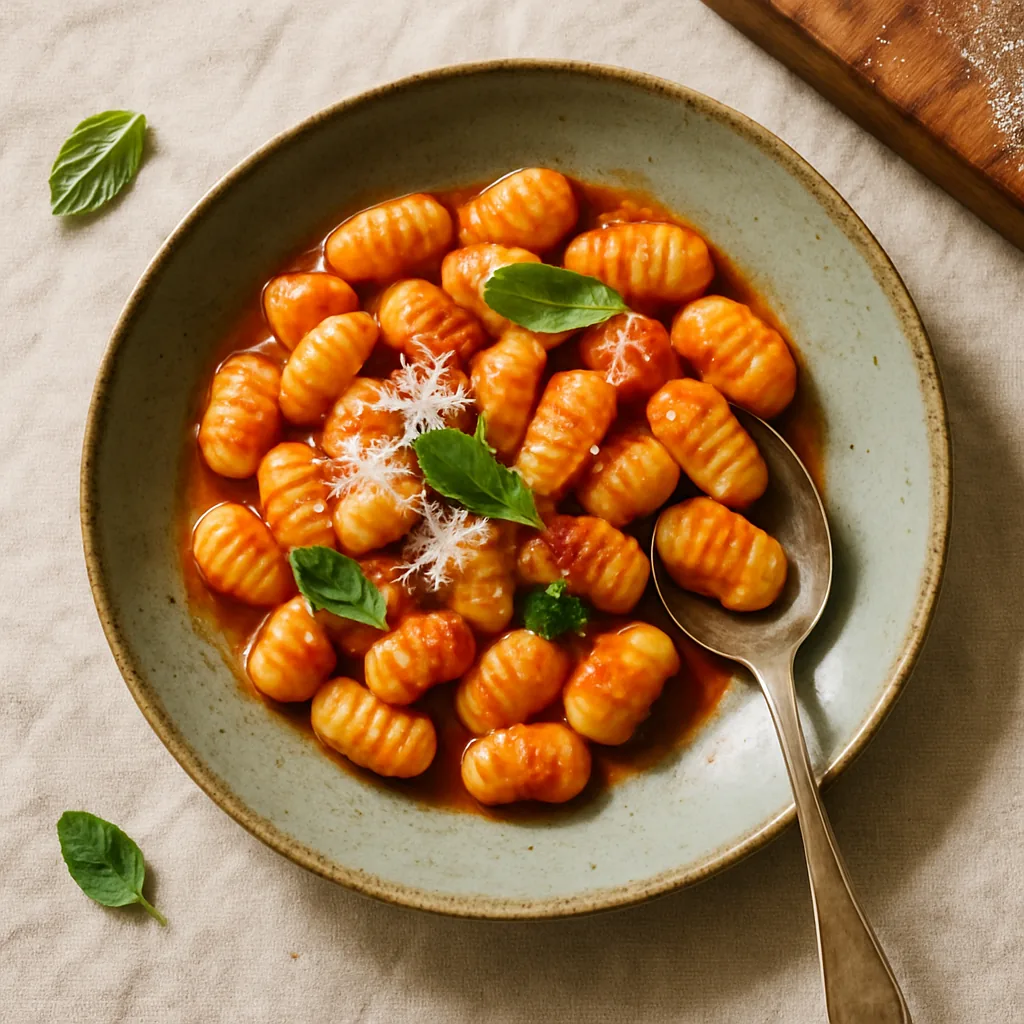
So this recipe takes the filling and stops pretending. Potato, mint, pecorino and a little ricotta go into the gnocchi themselves rather than inside a wrapper, and the whole business takes forty minutes instead of a lifetime. Nobody in Ogliastra would call the result culurgiones and I am not going to either. It tastes of the same thing, which is the part worth having.
Mint with potato sounds wrong to everyone who has not tried it and is right. Do not swap it for basil out of nerves.
- Prep 30 min
- Cook 30 min
- Serves 2
- Cost €
Method
- 1
Boil the potatoes whole, skins on, in salted water until a knife slides through with no resistance.
Skins on and whole matters. Peeled, chopped potatoes drink water, wet potato needs more flour, and more flour gives you heavy gnocchi.
25 min
- 2
While they cook, make the sauce: warm the oil in a small pan, add the passata and a pinch of salt, and simmer gently until it thickens slightly. Tear in half the basil and turn it off.
15 min
- 3
Drain the potatoes and peel them while they are still too hot to hold comfortably, using a fork and a tea towel. Mash or rice them straight onto a floured worktop and spread them out to cool for five minutes.
8 min
- 4
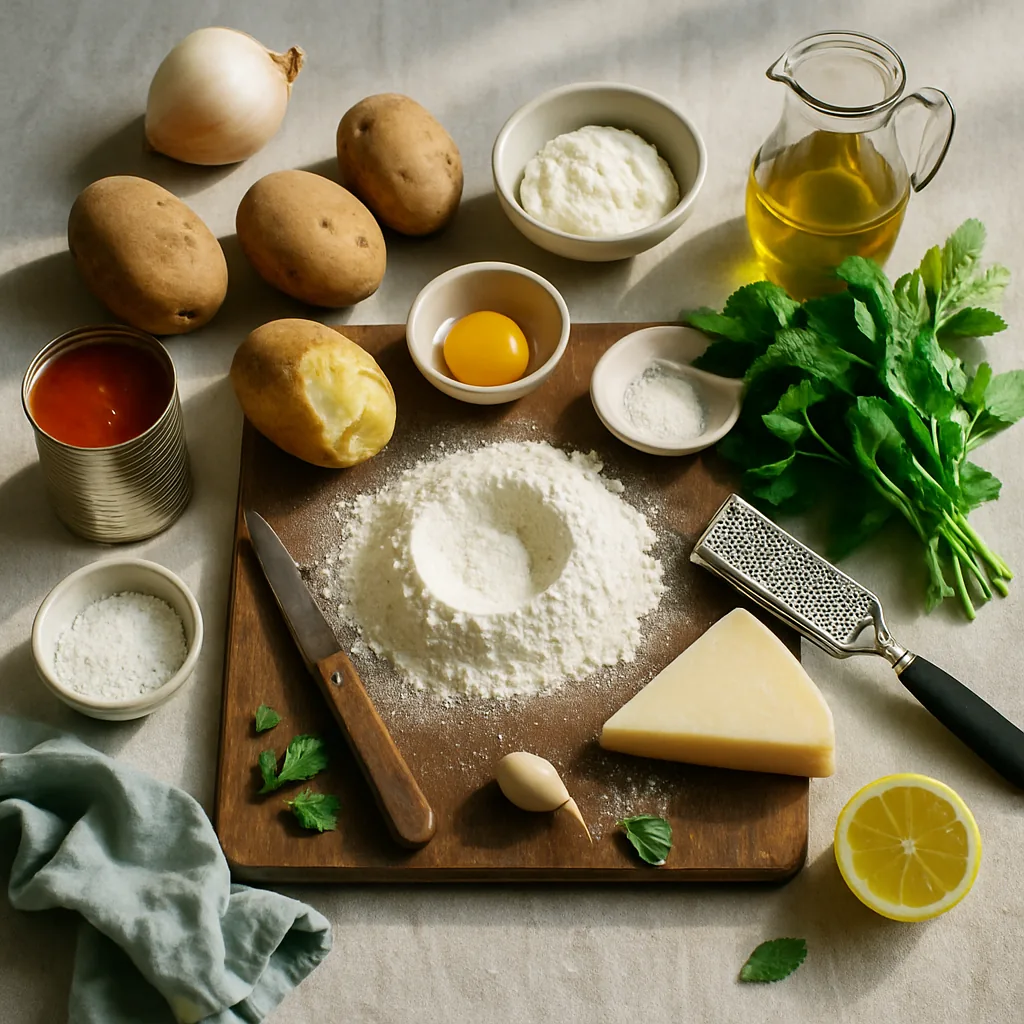
Scatter over the ricotta, pecorino, mint, garlic, egg yolk, a good pinch of salt and pepper, then the flour. Bring it together with your hands into a soft dough and stop the moment it holds.
Knead this like bread and you will make erasers. Ten seconds of handling is plenty.
4 min
- 5
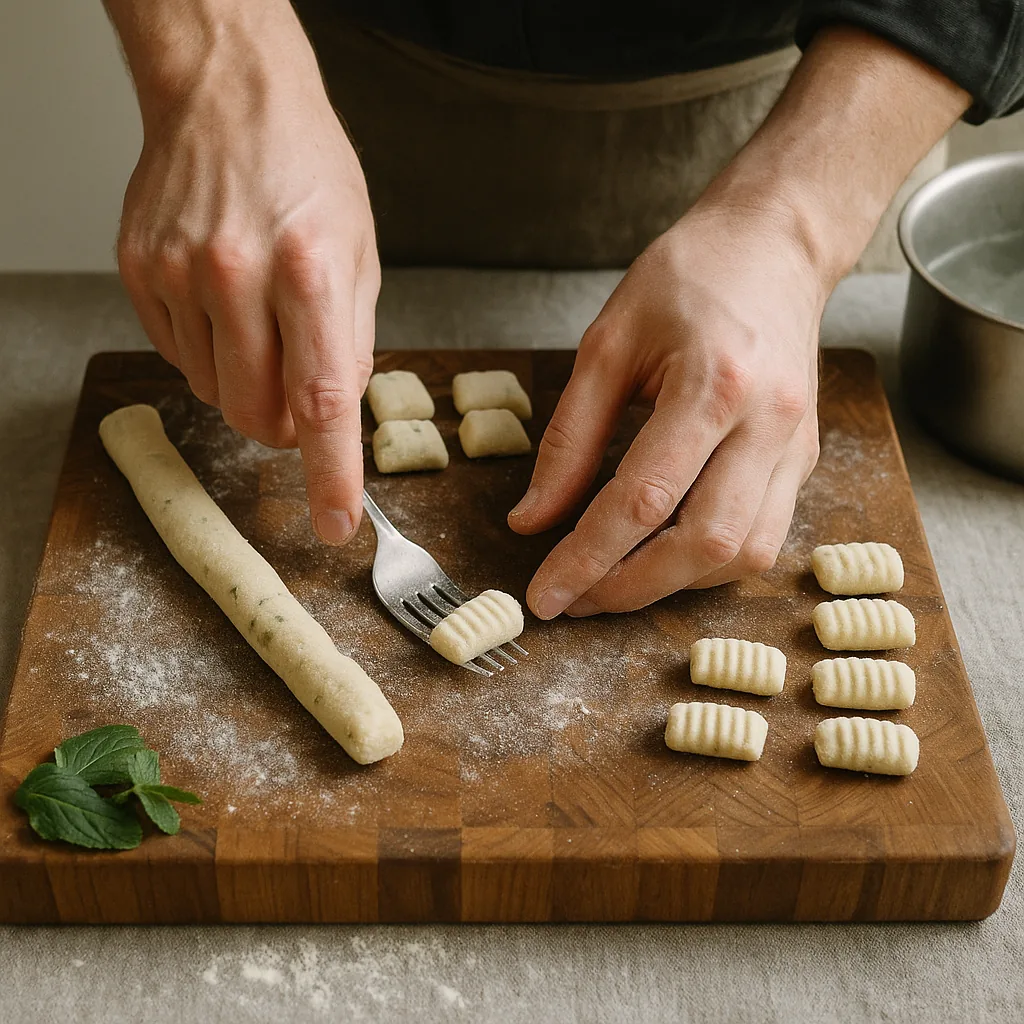
Cut the dough into four, roll each piece into a rope about 2 cm thick, and cut into 2 cm pillows. Press each one lightly against the back of a fork if you want ridges to hold the sauce.
10 min
- 6
Boil them in plenty of salted water in two batches. They float after a minute or so, and want another thirty seconds after that. Lift them out with a slotted spoon straight into the warm sauce.
5 min
- 7
Toss gently, plate, and finish with more pecorino, black pepper, and the rest of the basil.
2 min
Variations
Brown butter with sage instead of tomato is the other classic finish, and takes two minutes: melt 40 g butter until it smells of hazelnuts, throw in a few sage leaves, pour over.
Gnocchi freeze better than almost anything else you can make by hand. Lay the raw ones on a floured tray, freeze until solid, then bag them. Cook from frozen, adding a minute.
Leave out the ricotta for something denser and closer to the traditional filling, or add the finely grated zest of half a lemon, which is not traditional at all but works with the mint.