Recipe
Frittata with spinach, ricotta, and peas
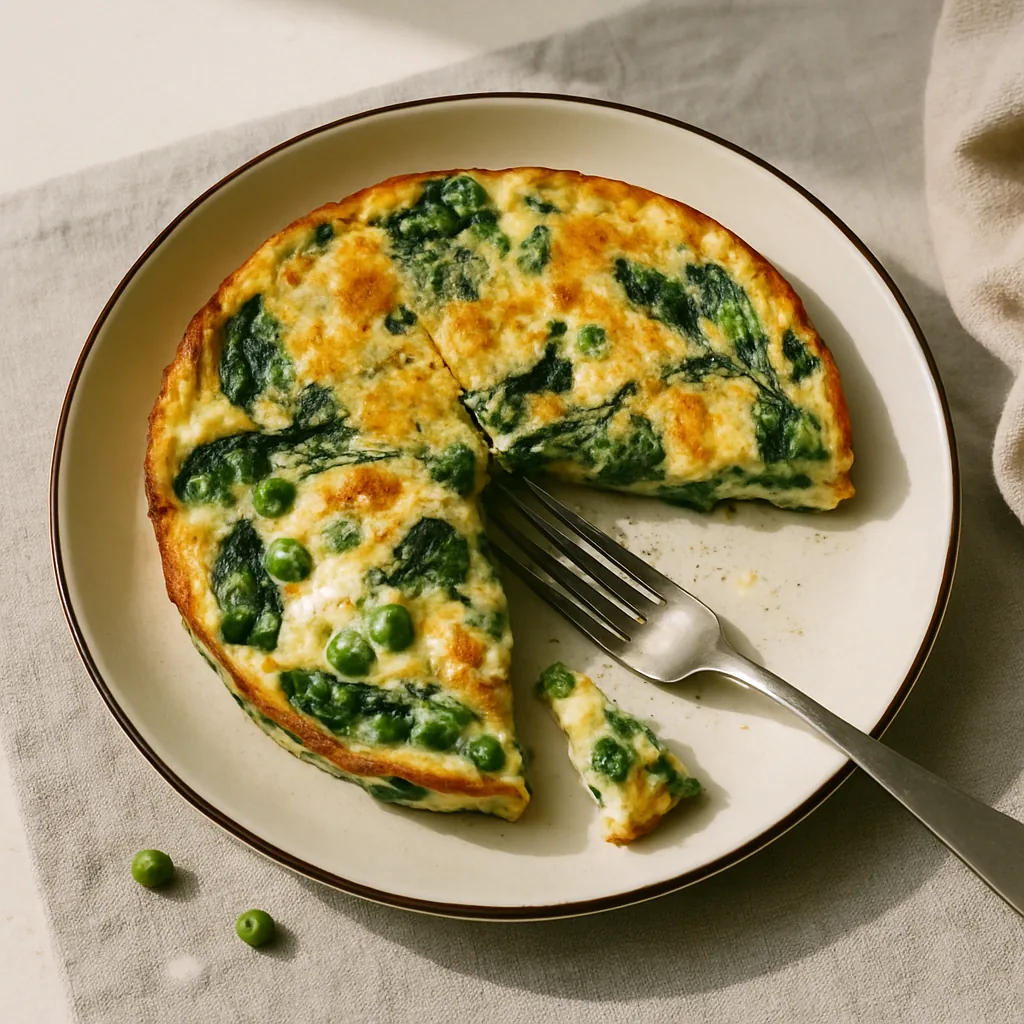
A French omelette is a technique. An Italian frittata is a solution.
The distinction matters more than it sounds. An omelette is judged on execution: no colour on the outside, a soft and barely set interior, folded in three, and there are chefs who will tell you they can assess an entire kitchen brigade by asking one person to make one. It is a test, and it is meant to be.
A frittata is not a test. A frittata is what happens when there is something in the fridge and somebody has to eat. It is cooked slowly, on both sides, until firm the whole way through. It is meant to be sliced. It is meant to be eaten later, quite possibly somewhere else. Nobody in the history of cooking has been professionally assessed on a frittata, and if they ever were, the only sensible criterion would be whether it used something up.
That difference in purpose runs right through Italian home cooking, and it explains why so many Italian recipes have infuriatingly vague quantities. A dish designed to use up whatever exists cannot specify how much of it there is.
This one is spinach, ricotta and peas, which is the version for a week that has gone beige. The ricotta is what makes it worth doing: it stays in soft white pockets rather than melting away into the eggs, so you get creamy patches through the green, and it keeps the whole thing moist enough to eat cold two days later without the rubberiness a plain egg frittata develops by Wednesday.
Squeeze the spinach. Squeeze it considerably harder than seems necessary, and then squeeze it again. Water is the enemy here, and wet spinach gives you a frittata that weeps quietly in the box all morning.
- Prep 10 min
- Cook 20 min
- Serves 2
- Cost €
Method
- 1
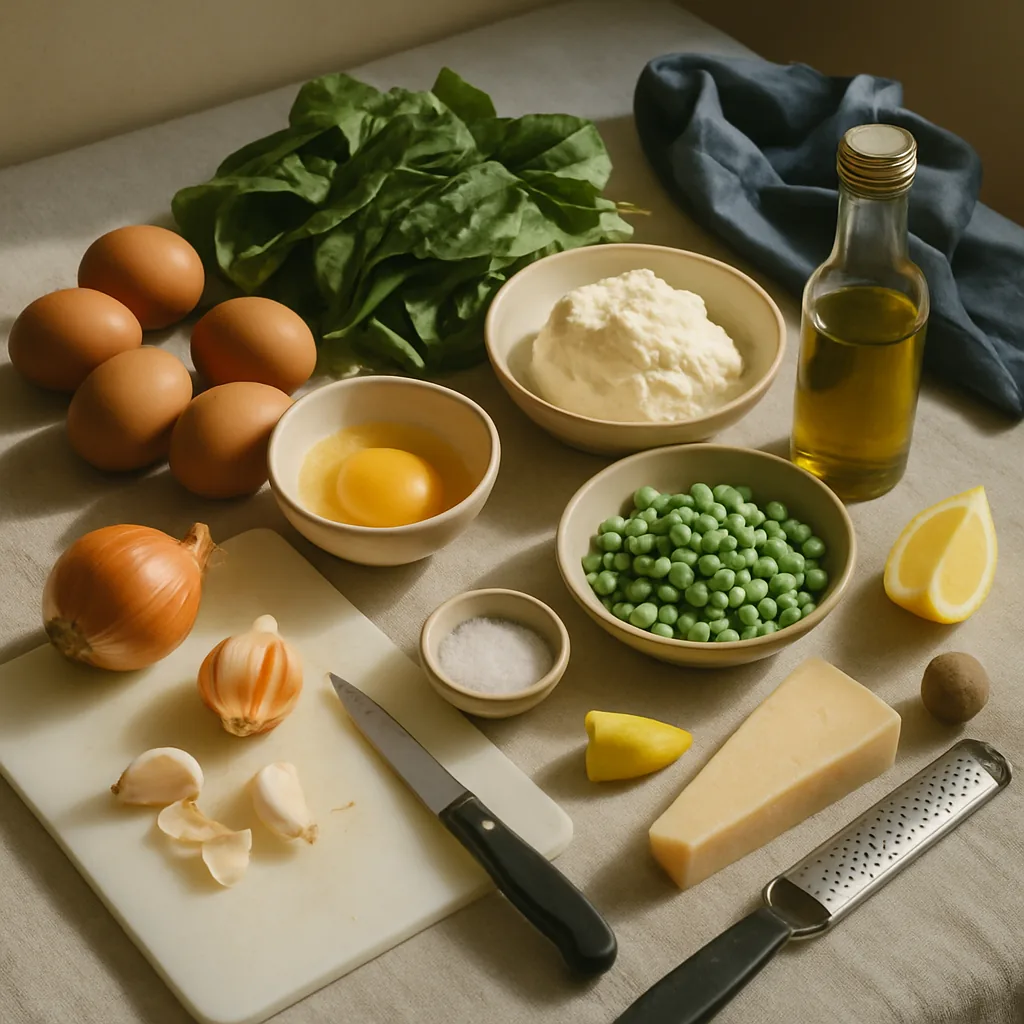
Wilt the spinach in a dry pan with a splash of water, then tip it into a colander. Once cool enough to handle, squeeze it in your hands until no more water comes out, then chop it.
8 min
- 2
Cook the peas in boiling water for 3 minutes and drain well.
4 min
- 3
Warm 2 tbsp of the oil in a 24 cm non-stick pan, add the garlic for 30 seconds, then the spinach and peas. Season and turn them in the oil.
3 min
- 4
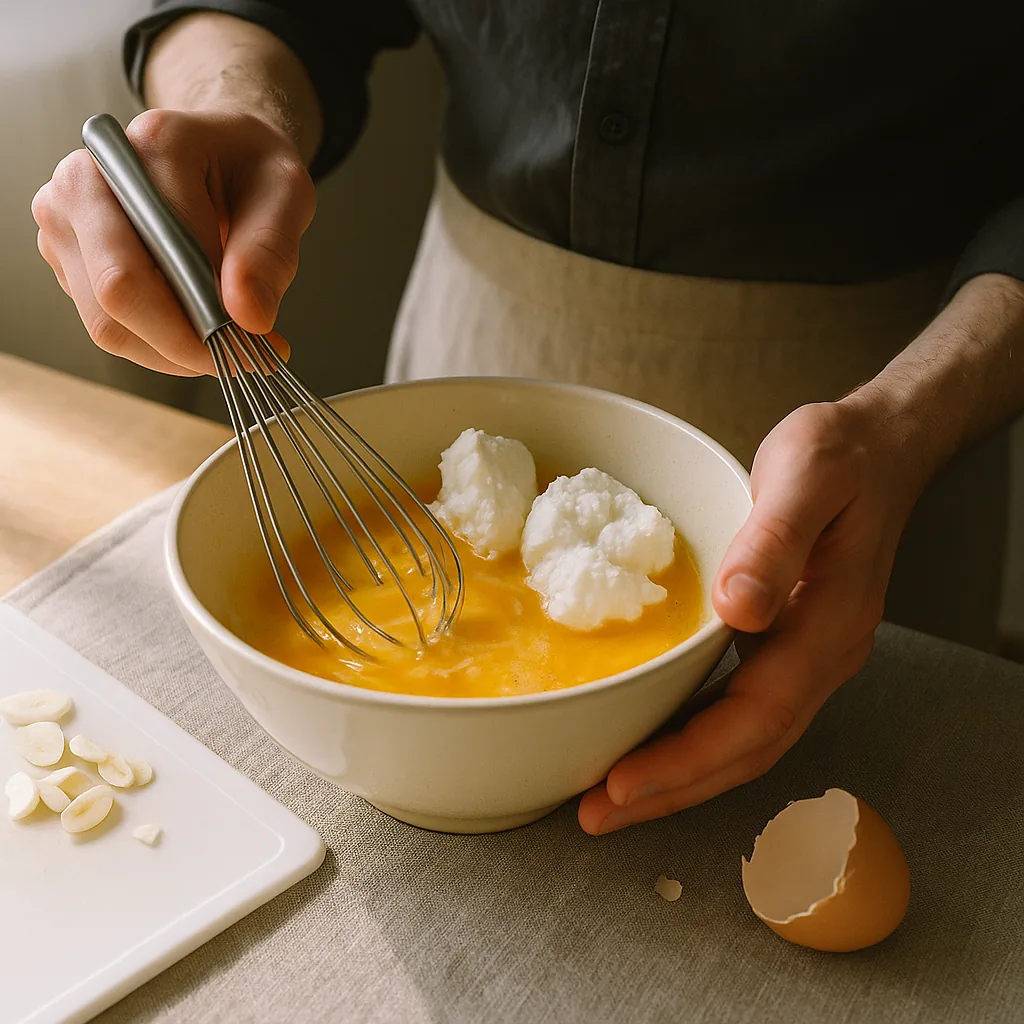
Beat the eggs with the parmigiano, nutmeg, lemon zest, salt and pepper, and pour over the vegetables. Spread level.
2 min
- 5
Dot the ricotta over the surface in teaspoonfuls. Do not stir it in, or it disappears and you have wasted it.
1 min
- 6
Cook on low with a lid on until almost set, then flip onto a plate and back into the pan for 3 minutes, or finish under a hot grill. Cool before cutting.
16 min
Variations
Chard, kale or rocket instead of spinach. Broad beans in place of peas in spring. Feta or goat's cheese instead of ricotta, which is saltier and sharper. Mint instead of lemon zest. Add a handful of cooked pasta or rice to bulk it out. For a dairy-free version, skip the ricotta and parmigiano and add a spoon of tahini beaten into the eggs, which is unorthodox and good.