Recipe
Couscous with chickpeas, courgette, and roasted peppers
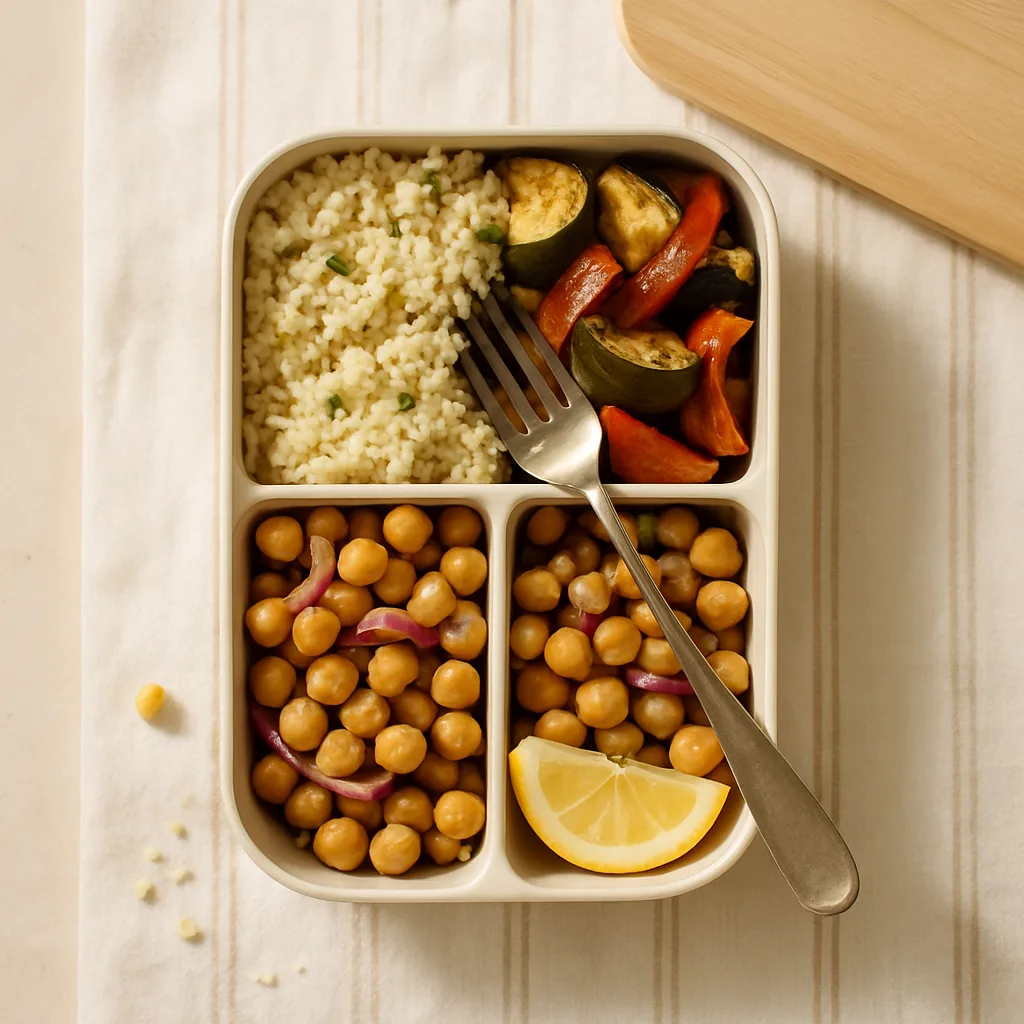
There is a town on the western tip of Sicily where the local speciality is couscous, and it confuses people who think they already know what Italian food is.
Trapani has been eating cùscusu since at least the fifteenth century and probably a good deal longer, and it arrived the way most good things arrived in Sicily, which is across ninety miles of water from North Africa. The Trapanese version is served with fish, steamed over a broth in a perforated terracotta pot called a mafaradda, and there is an annual festival for it at San Vito Lo Capo that draws several tens of thousands of people. None of this is a fusion experiment or a recent idea. It is simply what people there have always eaten, in a part of Europe that is closer to Tunis than it is to Rome.
The reason it belongs in a book about cooking for one is that couscous is the least demanding starch in existence. It is not really cooked, it is hydrated. Equal volumes of couscous and boiling water, a lid, five minutes, a fork. There is no pot to watch, no timing to get wrong, nothing to drain, and nothing that can stick. On the evenings when even boiling pasta feels like an imposition, this is the answer.
Chickpeas go in for the protein, roasted courgette and peppers for everything else, and the whole thing is equally good hot, warm, or cold out of a box the following day, which is a rare property and worth more than it sounds.
One technique worth stealing: toast the dry grains in a little oil in the pan for a minute before the water goes in. It takes sixty seconds and it is the difference between couscous that tastes of something and couscous that tastes of a hotel buffet.
- Prep 15 min
- Cook 25 min
- Serves 2
- Cost €
Method
- 1
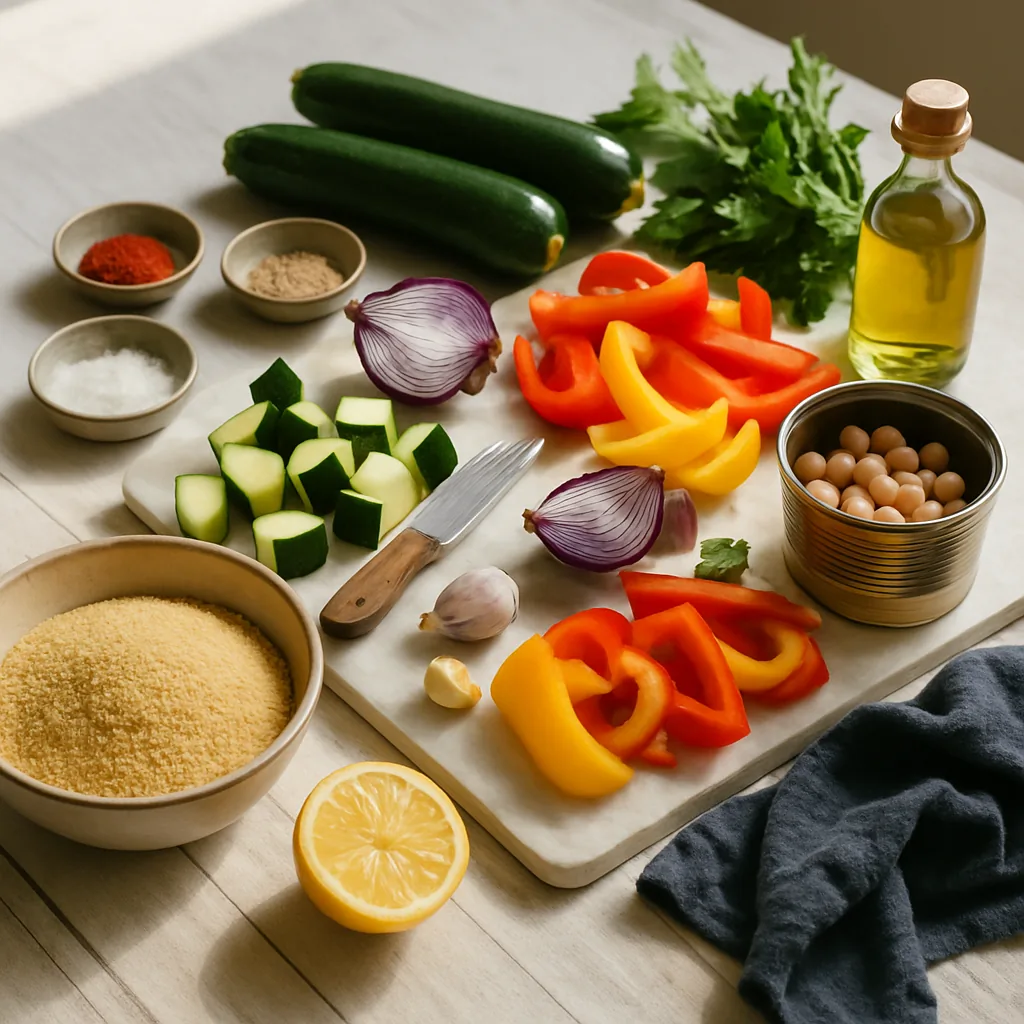
Heat the oven to 220°C fan. Toss the courgette, peppers and onion with 3 tbsp of the oil, the cumin, paprika and plenty of salt. Spread over a tray with space between them.
8 min
- 2
Roast until the edges are properly caught and dark. Add the drained chickpeas to the tray for the last 10 minutes so they dry out and crisp slightly.
25 min
- 3
Meanwhile toast the dry couscous in the remaining oil in a saucepan over medium heat for a minute, stirring, until it smells nutty.
2 min
- 4
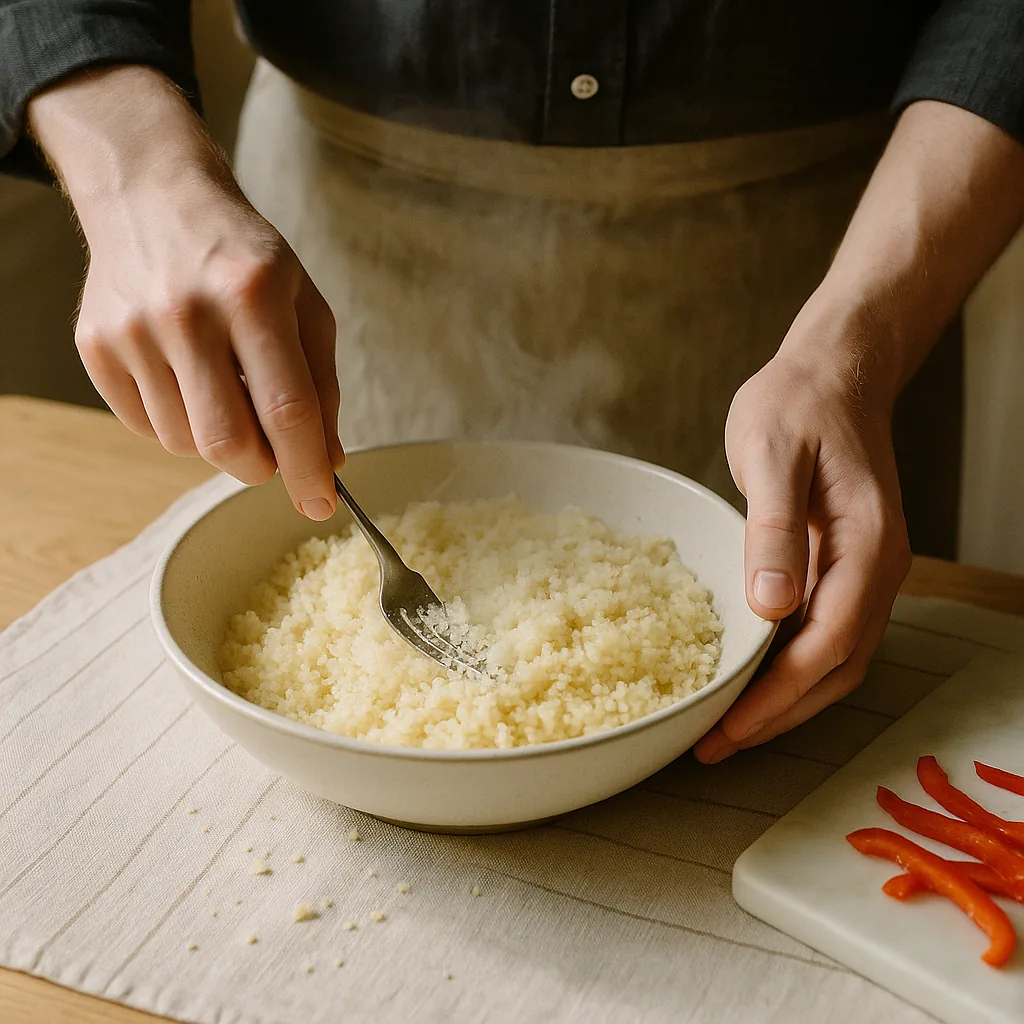
Pour over the boiling water or stock, add a good pinch of salt, cover with a lid, and take it off the heat. Leave it 5 minutes and do not lift the lid.
6 min
- 5
Fork the couscous through to separate the grains, working from the outside in.
2 min
- 6
Fold in the roasted vegetables and chickpeas with all the oil from the tray, the lemon juice and the herbs. Taste for salt, which it will want more of than you expect.
3 min
Variations
A spoon of harissa stirred through the lemon juice takes it to North Africa properly. Roasted aubergine or pumpkin instead of courgette. Crumbled feta or a dollop of yoghurt on top, which loses the vegan flag. Toasted almonds and raisins for a sweeter Sicilian version, minus the nut-free flag. Add a tin of tuna to make it heavier. Keeps 3 days and is genuinely better on day two.