Recipe
Caponata with chickpeas and couscous
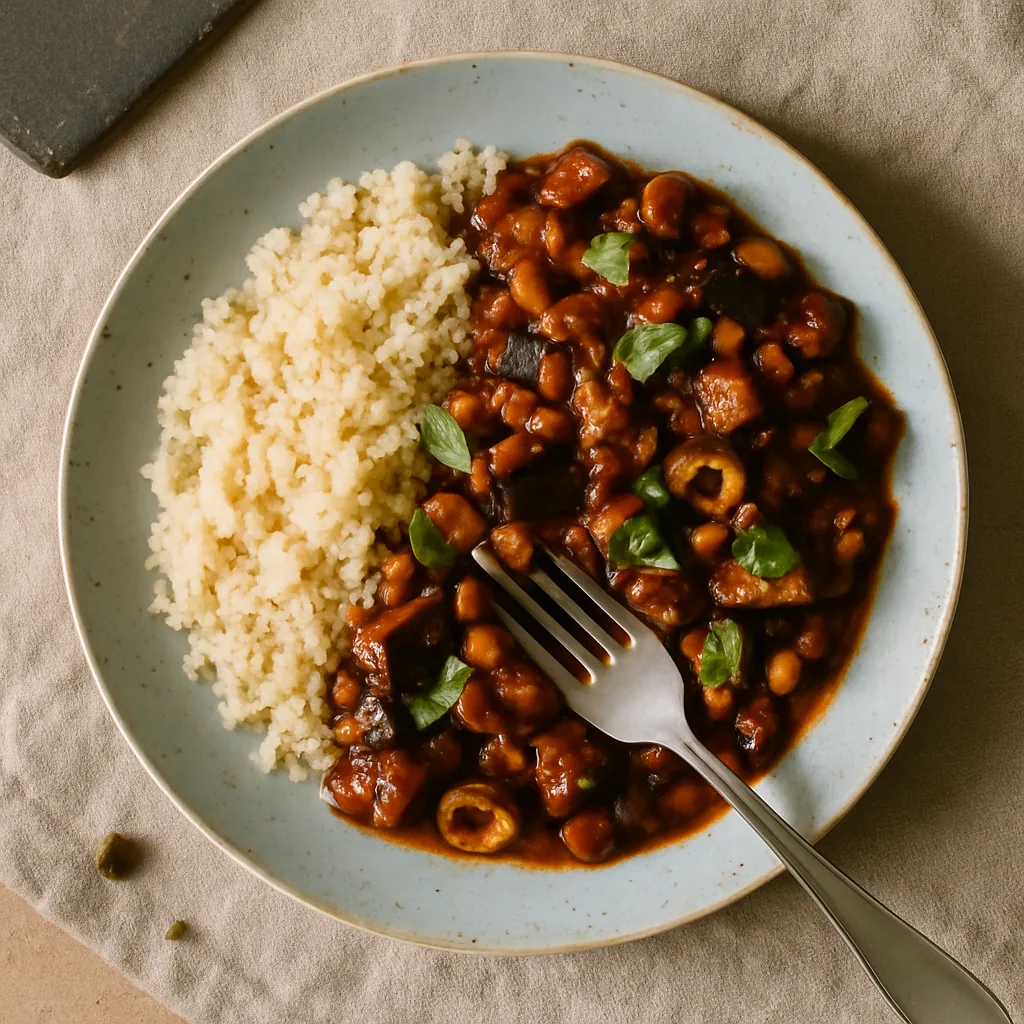
My great-aunt in Catania made caponata in a quantity that can only be described as industrial.
Not a pan. A pot roughly the size of a bucket, once a fortnight through the summer, on a two-ring hob in a kitchen sitting at about thirty-six degrees. She would then decant it into every jar the household owned and distribute it around the building like a woman running a small charity. Nobody asked for caponata. Caponata arrived.
Her position, stated frequently and without room for discussion, was that caponata is not a dish you make for tonight. It is a dish you make and then leave alone. Eaten on the day it is cooked it is a perfectly decent sweet and sour aubergine stew. On the second day it becomes caponata. By the third day it has turned into something else entirely, dense and dark and properly balanced, and by then it has usually gone.
The sweet and sour is the part people get wrong. It is called agrodolce, it comes from vinegar and sugar added right at the end off the heat, and the quantities feel wrong while you are doing it. Two tablespoons of vinegar going into a pan of soft vegetables smells alarming for about ninety seconds and then settles into the exact thing that makes the dish work. Do not reduce it. Do not be sensible about it.
The chickpeas are mine and my great-aunt would have raised an eyebrow, because in Sicily this is an antipasto or a side, never a dinner. But a bowl of vegetables at 13:00 on a Wednesday is not lunch, and chickpeas turn it into one without changing what it tastes like at all. Couscous underneath needs four minutes and a kettle.
Make it on Sunday. Do not eat it on Sunday.
- Prep 20 min
- Cook 30 min
- Serves 2
- Cost €
Method
- 1
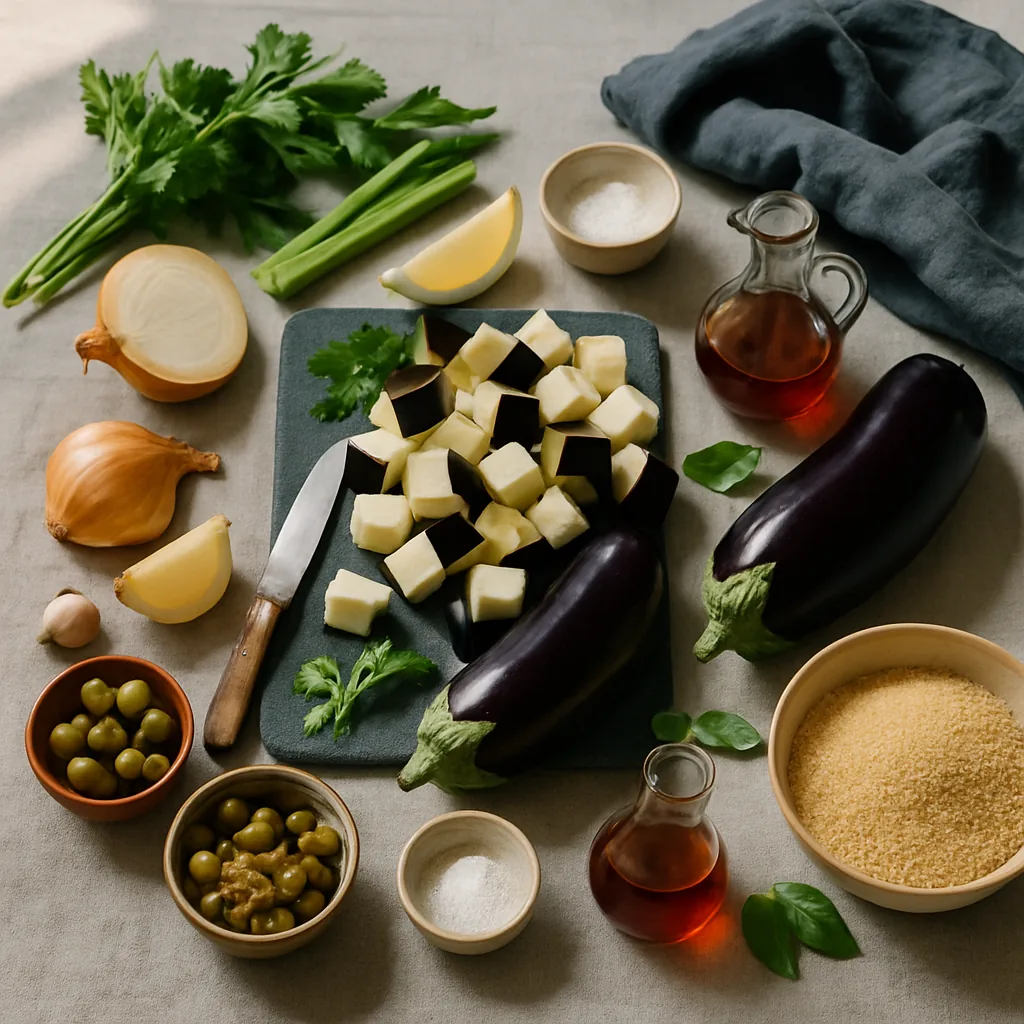
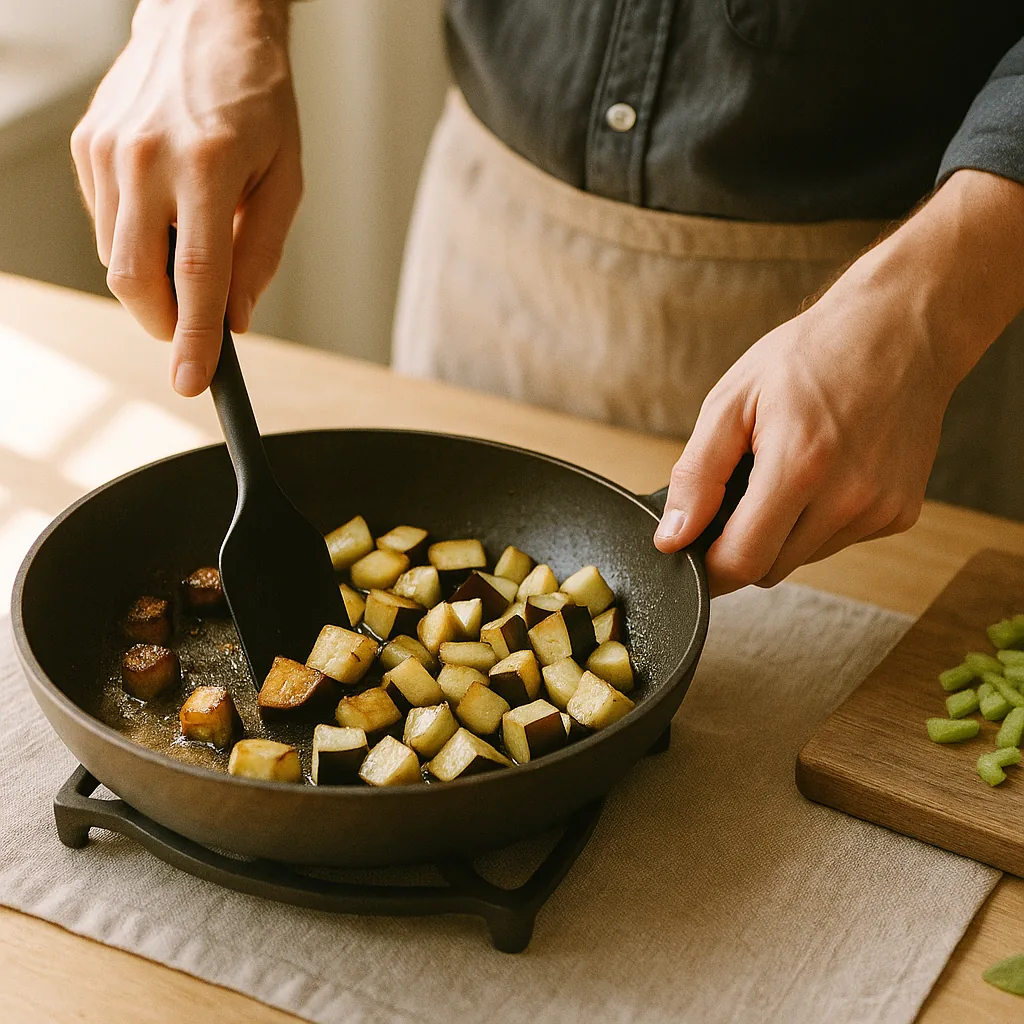
Toss the aubergine cubes with 4 tbsp of the oil and a good deal of salt, spread them on a tray, and roast at 220°C fan until collapsed and dark at the edges. This uses far less oil than frying and gets you to the same place.
25 min
- 2
Meanwhile cook the onion and celery in the remaining oil in a wide pan over medium heat until soft but still with some bite.
10 min
- 3
Add the tomatoes, olives, capers and chickpeas. Simmer until thick and no longer watery.
12 min
- 4
Fold in the roasted aubergine. Take the pan off the heat, add the vinegar and sugar, and stir. It will smell aggressive. Leave it 2 minutes and taste again.
3 min
- 5
Tear in the basil and season. Cool completely, then refrigerate. It is at its best on day two or three.
2 min
- 6
For the couscous, pour over an equal volume of boiling salted water, cover with a plate, and leave 5 minutes. Fork it through with a spoon of olive oil.
6 min
Variations
A handful of raisins and toasted pine nuts is the Palermo version and loses the nut-free flag. Roasted red peppers instead of half the aubergine make it sweeter and cheaper. Some Sicilian families add a spoon of cocoa powder, which sounds mad and works. Serve on toasted bread as an antipasto, or alongside a frittata. Keeps 5 days in the fridge and freezes well, which very few salads do.