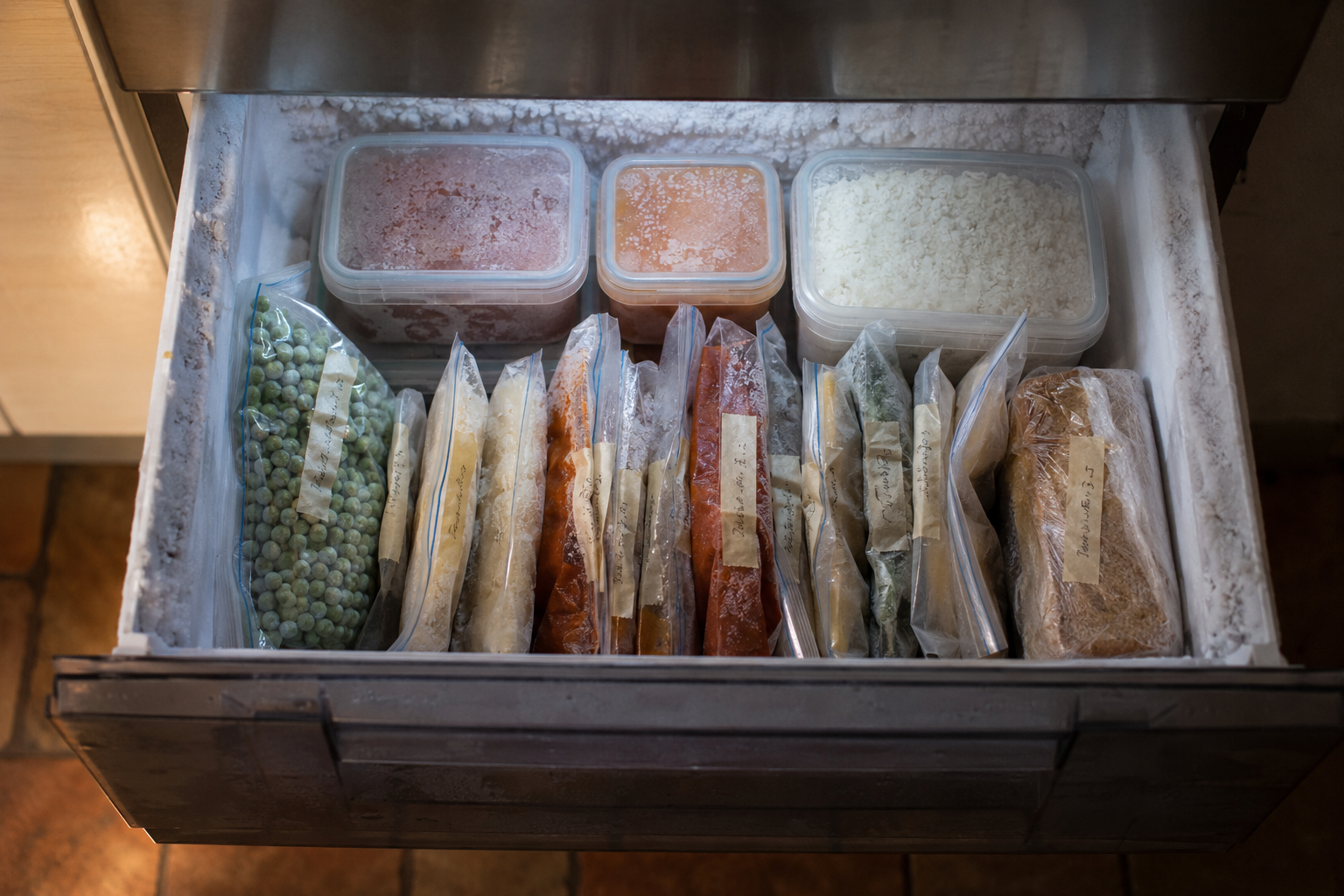
The fundamental rule: nothing goes in unlabelled
The single biggest improvement you can make to your freezer is a roll of masking tape and a sharpie.
Every container, every bag, every wrapped portion gets a label with two pieces of information: what it is, and the date it went in. Without these, the freezer is a guessing game, and you are the loser of the game.
What the freezer is actually for
The freezer is not, despite the way most of us use it, long-term storage for food you might want to eat someday. It is short-term storage for food you definitely will eat soon.
The maximum useful horizon for most things is six to eight weeks. Anything older becomes "wait, what did I freeze on the day of the dinner that wasn't great?" and gets thrown out anyway, just nine months later.
Treat it as your future-self's pantry, not your present-self's wishful thinking.
What to actually keep in there
A useful freezer has three categories.
Single-portion proteins. A handful of chicken thighs, a pack of guanciale or pancetta in 50g chunks, two slices of salmon. Defrosts in under an hour, becomes dinner.
Pre-cooked starches. Rice cooked in batches and frozen flat in zip bags. Cooked beans (homemade or from a giant batch). Roasted potatoes. The night you have one of these on hand and a can of tomatoes, you have dinner.
Surprise weapons. Ginger root (grates straight from frozen). Sliced lemons for cocktails. A bag of breadcrumbs (the freezer is the only place stale bread doesn't get worse). Fresh herbs frozen in olive oil in ice cube trays.
What to freeze from this book
The three categories above are the general case. Here is the specific one, for
the dishes in these pages.
Freeze well, in single portions: minestrone, lentil soup, pasta e fagioli,
and any pot of cooked pulses. Bread, sliced, which toasts straight from frozen
and is quietly the most useful thing a person living alone can keep in a
freezer.
Freeze the base, not the finished dish. Pasta e ceci and pasta e fagioli
freeze beautifully up to the point where the pasta goes in, and badly
afterwards, for the reason given below about cooked pasta. So freeze the soup,
and cook 40 g of pasta into it on the night. Two minutes of work, and it tastes
like it was made that evening, because most of it was.
Do not bother with: anything with potato in it, which goes grainy and
watery. Frittata, which weeps. Roast vegetables, which lose the only quality
that made them worth roasting. Anything already dressed.
And the timing, which matters more than the list. Freeze at the moment of
cooking, while you are still standing at the worktop with the pot in front of
you. Not in three days, when it has become a fridge problem you are solving. A
portion frozen on Sunday because you always meant to freeze it is next month's
easy Thursday. A portion frozen on Wednesday because it was about to turn is a
portion frozen in defeat, and those are the ones still in there in March.
What does not belong in the freezer
Cheese (it crumbles on thaw). Fresh leafy salads (it kills them and they don't come back). Cooked pasta (the texture goes to hell). Eggs in their shells (they explode). Most fried things (sad on reheat). Anything with mayonnaise (catastrophic).
The defrost rule that saves dinner
The single best habit is a Sunday-night transfer. Glance at what you intend to cook this week, move the relevant frozen things to the fridge.
By Tuesday they're defrosted, ready to use, and you have not stood in front of the freezer at 7pm holding a brick of pork shoulder with the dawning realisation that dinner will be four hours later than planned.
Also: do not defrost in the microwave. It half-cooks the edges. Just plan an hour earlier.
Freeze it flat
How you freeze something decides whether you will ever use it, and this is a
five second habit that changes the whole drawer.
Bags, laid flat, not tubs. A portion of soup frozen flat in a freezer bag is
a two centimetre slab. It stacks like a book, it takes a fraction of the space,
and it defrosts in a fraction of the time, because defrosting is about surface
area rather than volume. A tub of the same soup is a brick that takes a full day
in the fridge.
Fill, squeeze the air out, seal, lay flat on a tray. Once frozen solid, the
tray comes out and the slabs stand upright in a drawer like files. You can read
the labels without excavating.
Freeze in the portion you will eat, which for this book means one. Two
portions frozen together means defrosting two portions, which means either
eating both or refreezing, and refreezing cooked food is the one genuine no.
Grate straight from frozen. Ginger, parmigiano rinds, butter for pastry.
Some things are actually easier frozen than fresh.
What freezer burn actually is, and how to avoid it
The grey leathery patches are not spoilage and they will not hurt you. They are
dehydration: ice moving from the surface of the food into the colder air of the
freezer, leaving the surface dry and oxidised. The food is safe and it tastes
like cardboard, which is a distinction without much practical difference.
Three causes, all avoidable.
Air in the packet. The single biggest one. Squeeze the bag flat before
sealing, or press cling film onto the surface of anything in a tub. Air touching
food is what does the damage.
Temperature swings. Every time the door opens, the surface warms fractionally
and refreezes, and each cycle moves a little more water out. A full freezer
swings less than an empty one, which is a genuine argument for keeping bread in
there.
Time. Even done perfectly, the six to eight week horizon in this note is
about the point where quality starts to go. Nothing becomes dangerous. It simply
stops being worth eating, which is the same outcome by a slower route.
If something does come out burnt at the edges, cut the affected part off and use
the rest in something with a strong sauce. It is a downgrade, not a write-off.
The discipline part
Once a season, do a freezer purge. Twenty minutes. Throw out anything older than two months that you didn't get around to.
This is not waste. The waste happened the day you froze it without a plan. Throwing it out is just the bookkeeping.
A working freezer makes a small kitchen feel twice as big and a busy week half as stressful. A graveyard freezer just makes the bag of frozen peas hard to find. Pick the first one.