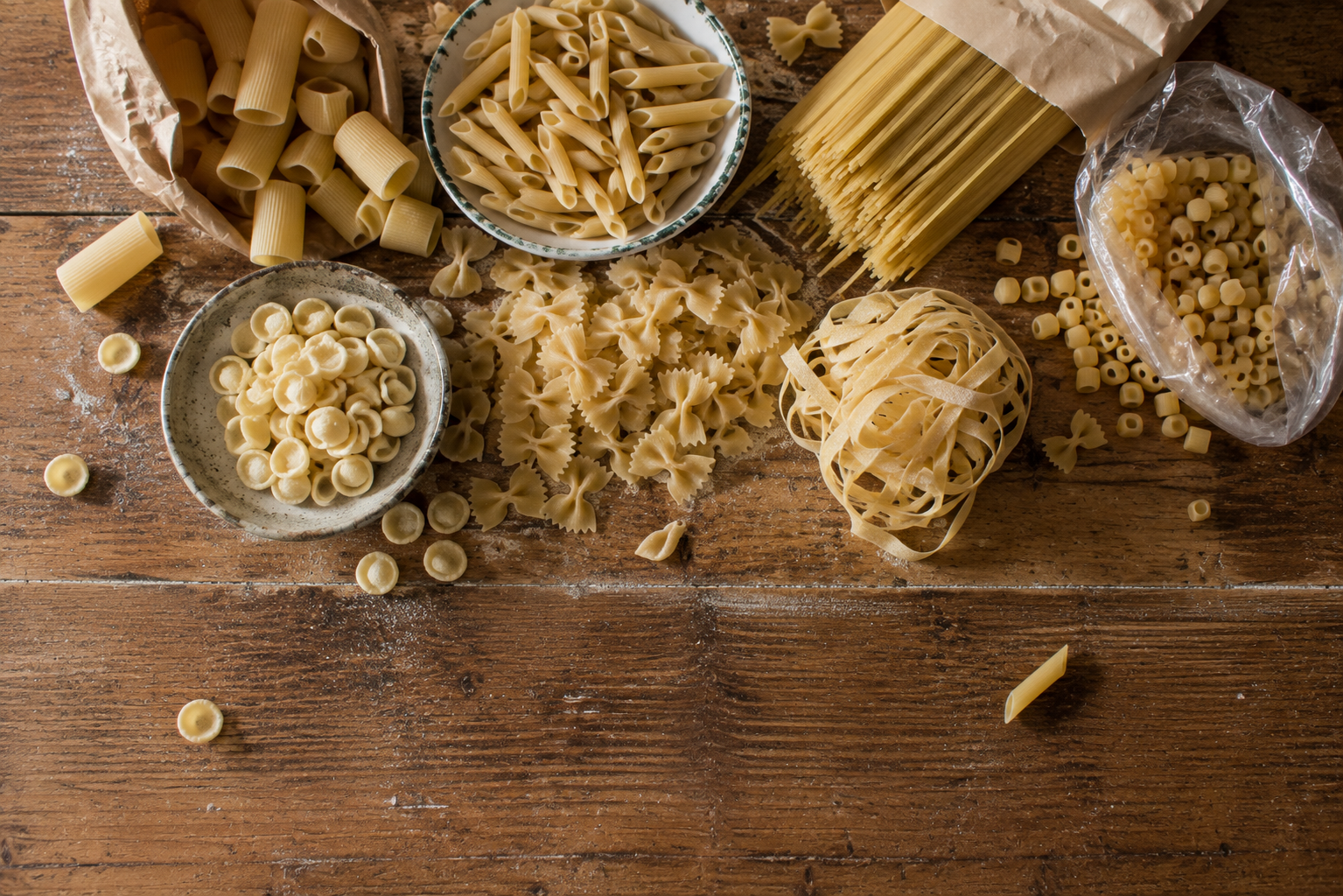
The two shapes that should always be in your cupboard
If your pantry holds only two pasta shapes, these are them.
Penne rigate. The most forgiving shape ever invented. Holds tomato sauce, holds cream sauce, works in pasta al forno, takes the light dressing of olive oil and parmigiano without complaint, and will not turn into mush if you cook it two minutes too long. A small kitchen miracle.
Spaghetti. Universal. With clams, with garlic and oil, with tomato, with carbonara, with tuna, with a fried egg on top. If you can have only one shape, have spaghetti. If you can have two, have spaghetti and penne. You are now equipped for 90% of the Italian pasta canon.
The ranking by laziness
From most forgiving (top) to most demanding (bottom):
- Penne rigate. The lazy person's pasta hero. Cooks in 9 to 11 minutes, holds anything, never embarrasses you.
- Spaghetti. Equally forgiving but you have to remember to twirl. Avoid breaking it in half before cooking; this counts as a war crime in some regions.
- Rigatoni. Penne's bigger, more confident cousin. Great for chunky sauces, great for baking. Takes a minute longer to cook, which on a tired night feels long.
- Fusilli. Holds pesto better than anything else. Slightly more interesting in a salad. Otherwise, penne does the job.
- Linguine. Spaghetti with ambition. Use for clams, for a buttery pesto, for shrimp. Slightly more elegant for almost no extra effort.
- Bucatini. The fun one. Hollow spaghetti. Wonderful with amatriciana, splatters tomato sauce on white shirts with reckless enthusiasm. Avoid wearing white when eating.
- Tagliatelle (or fettuccine, or pappardelle). Egg pasta, fresh or dry. Lovely with ragù, butter sauces, cream. But fresh egg pasta requires either you or someone else to have made it that day. Dry egg pasta is fine but not as forgiving as rigatoni when overcooked.
- Orecchiette. A regional treasure with very specific friends (broccoli rabe, sausage). Beautiful in its lane. Outside its lane, lost.
- Lasagne sheets. Gorgeous, expensive in time, ten times the labor for the same calories. Hobby pasta, not Tuesday pasta.
The shapes you do not need
Bowtie pasta (farfalle): cute, a small disappointment in the mouth, consistently overcooked at the joints and underdone at the wings.
Conchiglie shells: technically correct, in practice usually a children's pasta.
The ridiculous artisanal shapes (radiatori, gigli, anything that looks like a piece of furniture): performative. Skip.
What "al dente" actually means and why it matters
Al dente is not a marketing claim. It is a texture: pasta with a slight resistance at the centre when you bite it. Around 30 seconds to a minute less than the package time, depending on the shape.
It matters because al dente pasta keeps cooking once tossed with the sauce, which is exactly the right amount of cooking. Pasta cooked to the package time and then sauced is overcooked.
This is the most common mistake and the easiest one to fix. Set a timer one minute earlier. Taste. Drain.
Shape to sauce, in four lines
The article opens by telling you not to worry about matching shapes to sauces,
which is correct on a Tuesday and slightly unfair on the tradition. Here is the
entire body of Italian regional argument compressed into something you can use.
Thin sauces go on long pasta. Oil, garlic, seafood, a light tomato. The
sauce coats the strand rather than sitting on it. Spaghetti, linguine.
Chunky sauces go on short pasta with holes or ridges. Anything with pieces
in it needs somewhere for those pieces to lodge. Penne rigate, rigatoni,
fusilli. This is why a ragù on spaghetti slides to the bottom of the bowl and a
ragù on rigatoni does not.
Soupy dishes go on small shapes. Pasta e ceci, pasta e fagioli, minestrone.
Ditalini, broken spaghetti, or whatever is at the bottom of the packet. The
pasta is an ingredient in a soup rather than the main event.
Creamy or cheesy sauces go on anything with a rough surface. Bronze-drawn
pasta, which says trafilata al bronzo on the packet, has a chalky, matte
surface instead of a shiny one, and sauce grips it. It costs perhaps 40 cents
more a packet and it is the single cheapest upgrade available in the pasta
aisle.
That is the whole system. Everything beyond it is regional pride, and regional
pride is wonderful and has never once improved a Tuesday.
The water: how much, how salty
Two numbers that matter more than the shape.
Salt: roughly 7 grams a litre, which is a rounded teaspoon. The old
instruction is that the water should taste like the sea, and the sea is
considerably saltier than that, so people either enormously oversalt or, far
more often, panic and add a pinch. A rounded teaspoon per litre, in after the
water boils, and the pasta is seasoned all the way through rather than sitting
in a sauce doing the work alone.
Under-salted pasta is the most common reason a home plate tastes flat when
everything else was done properly, and no amount of parmigiano at the end fixes
it, because the seasoning has to be inside the pasta.
Water: less than you have been told. The traditional instruction is a litre
per 100 grams. Two-thirds of that is plenty for one or two portions, it comes to
the boil faster on a small hob, and it produces starchier water, which is the
ingredient the next section is about. The only reason for a huge volume is to
stop the water dropping off the boil, and with 200 grams of pasta that is not a
real risk.
Do not add oil to the water. It floats on top, does nothing while the pasta
cooks, and then coats it as you drain, which is precisely how you make sauce
slide off.
The starch water rule
Always save a cup of pasta water before draining. Always. Even when you don't think you'll need it. The one time you don't save it is the one time you needed it.
Tossed into the pan with the sauce, it emulsifies the oils, helps the sauce cling, and makes the dish look like the photograph. This is the difference between home pasta that tastes like home and home pasta that tastes like a restaurant.
Two shapes, the timer set early, the cup of starch water. That's the whole thing. You are already a better pasta cook than 60% of the people on Instagram.